About Taraxacum mongolicum Hand.-Mazz.
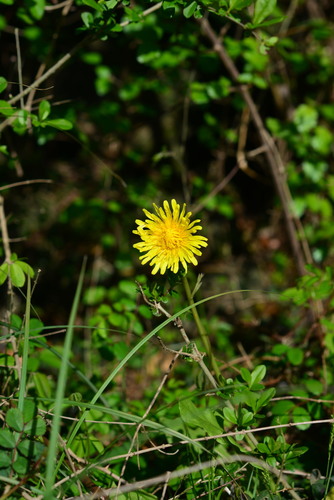
Taraxacum mongolicum Hand.-Mazz. is a small perennial herb that typically grows 8–25 cm tall. Its root is slightly conical, often bent, 4–10 cm long, with a brown surface and a shriveled root head covered in brown or yellowish-white woolly hairs. The stem is shortened but visible above ground. Basal leaves (leaves growing at the base of the plant) form a rosette and are mid-green. They are oblanceolate to oblong-lanceolate (inverted spoon-shaped to narrow and tapering), 6–15 cm long and 1–2.5 cm wide. The leaves are most often divided into 3–5 pairs of lateral lobes (side divisions), with margins that can be entire (smooth-edged), sparsely toothed, or pinnatifid (deeply lobed but not all the way to the center). The terminal lobe (at the leaf tip) is usually large, triangular or broadly triangular, with a rounded or blunt tip. Each leaf base tapers into a short petiole (leaf stalk). Most leaf surfaces are smooth to slightly hairy, and sometimes bear dark purple spots. Petioles and main leaf veins are often tinged red, and may have sparse arachnoid (cobweb-like) white hairs. This plant produces solitary leafless flower stalks called scapes, which emerge from the leaf axils (the point where the leaf meets the stem). These scapes measure 10–25 cm tall, and are roughly equal to or slightly taller than the leaves. They are brownish-green, and densely covered in fine hairs below the flower head. The flower head, or capitulum, is 3–4 cm wide, and made up of numerous yellow strap-shaped ligulate florets. The outer florets have grayish purple stripes, while the inner florets have purple-tipped margins. The involucral bracts (modified leaves around the base of the flower, also called phyllaries) range from ovate-lanceolate to lanceolate (egg to spear shaped). Outer bracts are often tinged with pink and bear fine hairs. The anthers are dark green and the stigmas are pale green. The fruits are obovate-lanceolate to oblong achenes (dry, single-seeded fruits), brown to grayish in color, and around 4.2–4.6 mm long. Their surface is rough, and ends in a cone-shaped apex. A slender 7–10 mm long beak extends from this apex, supporting a yellowish pappus (a ring of fine hairs that aids wind dispersal) that is about 6 mm long. Flowering occurs mainly from spring to early autumn, with peak blooming from March to September. This species reproduces asexually via agamospermy, which is seed production without fertilization. Taraxacum mongolicum is native to Europe and Asia, where it grows naturally in grasslands and other open, disturbed habitats. It is well-adapted to a wide range of soil types and climates, particularly in temperate regions. Across its native range, it has long been a common species in uplands, fields, and along roadsides. It was introduced to North America as a food crop, and has since become widely naturalized across the continent. It now occurs throughout North America, including in both residential and agricultural landscapes. In addition to spreading across North America, T. mongolicum has also established populations in Southern Africa, South America, New Zealand, Australia, and India. It is now broadly distributed across subtropical and temperate zones worldwide, and is known to tolerate both heat and cold. The leaves of Taraxacum mongolicum were first documented in 659 AD in the Xinxiu Bencao, an early Chinese materia medica. In traditional East Asian medicine, the species is considered to have antibacterial and anti-inflammatory properties, and has historically been used to treat mastitis, breast abscesses, and mammary gland hyperplasia. Pharmacokinetic studies have explored potential interactions between T. mongolicum and pharmaceutical agents. In one animal study, co-administration of an aqueous extract of the plant with the antibiotic ciprofloxacin significantly reduced the drug's maximum plasma concentration by approximately 73% in rats. The extract also altered the drug's distribution and elimination profile, increasing its apparent volume of distribution and terminal half-life. However, overall bioavailability, measured by the area under the plasma concentration–time curve (AUC), remained largely unchanged. These results show that T. mongolicum may affect the pharmacokinetics of some medications, and should be used with caution in clinical settings that involve concurrent drug therapy. A 2020 study investigated the effects of T. mongolicum extract in a mouse model of mastitis caused by the bacterium Staphylococcus aureus. Mice treated with the extract had significantly lower levels of inflammatory molecules in their mammary tissue, including tumor necrosis factor-alpha (TNF-α), interleukin-6 (IL-6), and interleukin-1 beta (IL-1β), all key indicators of inflammation. The extract also reduced the activity of myeloperoxidase (MPO), an enzyme released by immune cells during inflammation that acts as another marker of immune response. Microscopic examination of tissue samples showed that the extract reduced swelling, cell damage, and necrosis in affected mammary glands. On a molecular level, the anti-inflammatory effects were linked to decreased activation of the NF-κB and MAPK signaling pathways, which are involved in the body's immune response. The extract also lowered expression of Toll-like receptor 2 (TLR2), a protein that helps immune cells recognize bacterial infections. By interfering with these pathways, T. mongolicum appeared to reduce inflammation and protect tissues from further damage, suggesting potential therapeutic use for infections involving excessive inflammation, such as mastitis. Beyond traditional medicine, Taraxacum mongolicum is used in the food and nutraceutical industries. It has been used to make wines, candies, energy drinks, and various functional food products. Its roots are dried and brewed into tea. The plant contains a diverse range of active phytoconstituents, including flavonoids, triterpenoids, phenolic acids, sesquiterpene lactones, pigments, coumarins, and sterols. These compounds contribute to its characteristic flavor, described as "bitter and sweet", and its potential health-promoting properties.