About Taractrocera maevius (Fabricius, 1793)
Scientific name: Taractrocera maevius (Fabricius, 1793)
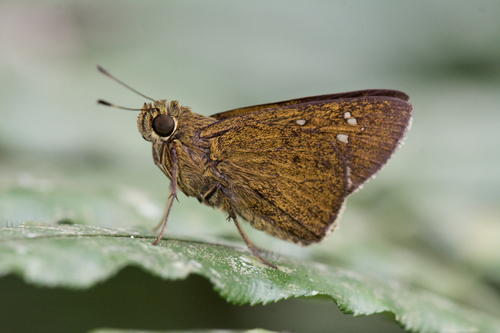
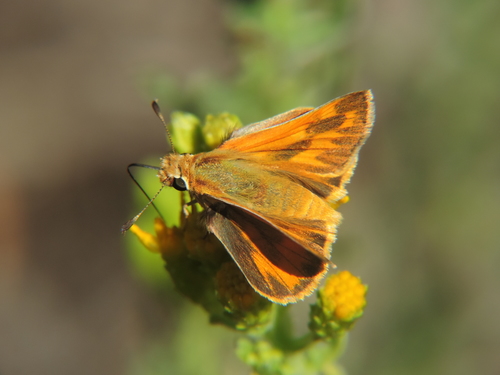
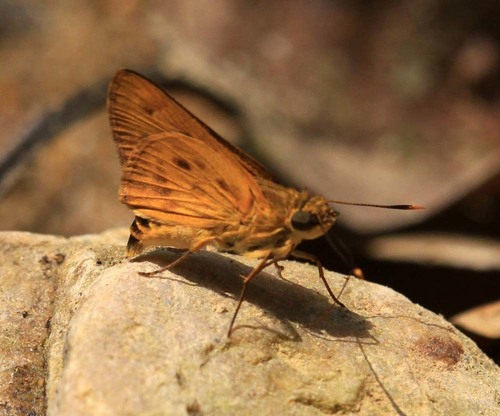
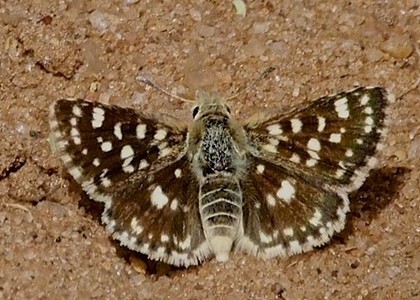
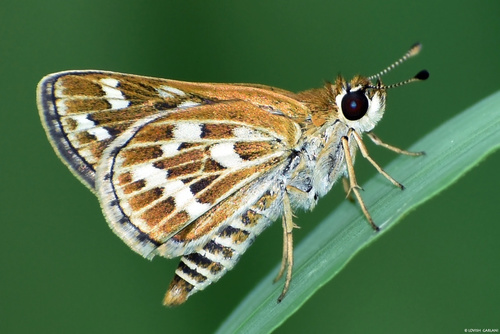
Male: Upperside is olive-brown with yellowish-white markings. On the forewing, there is a short streak on the median vein in the middle of the cell, another streak above it at the upper end, plus two short small streaks between this upper streak and the costa, which are sometimes connected to each other. A series of spots arranged in two sections crosses the disc: three conjoined spots from the costa near the apex, and four spots starting at the base of the second median interspace, separated from each other by veins. All these spots are somewhat quadrate and excavated on their outer sides, with two small quadrate spots closer to the margin in the fifth and sixth interspaces. On the hindwing, a series of small spots runs in an almost straight line across the middle of the disc. The cilia of both wings are grey with white tips.
The underside has a similar color, almost as dark as the upperside, with matching markings. However, the hindwing has an additional bar across the end of the cell, and two small sub-apical spots outside this bar. Antennae are black with white bands; the club has a white basal patch on the underside. Palpi are grey above with some white hairs, and pure white on the underside. The head and body match the wings in color, and the abdomen has white segmental bands.
Female: Upperside matches the male, but is somewhat paler, with larger, more prominent spots. Underside markings match those of the upperside. The costal and apical portions of the forewing are whitish, the veins below the costa and at the apex are white, and there is a narrow white outer marginal band along with a black marginal line. The entire hindwing is suffused with white, and all veins are pure white.
Field characteristics: The common grass dart is similar in size and markings to the Tamil grass dart *Taractrocera ceramas* Hewitson, but its forewing spots are white. It shares habits and habitat with the Tamil grass dart, but is also found away from hills, and is widespread across the plains of the Indian peninsula. In flight, it can resemble grass blues (Zizeeria spp.).
Status, distribution and habitat: It is one of the most common skippers in the grasslands of the Western Ghats, and occurs from low elevations up to montane grasslands. It is also found in grassy forest clearings and in rice fields. It is active during the monsoon and immediate post-monsoon months when vegetation is green, though occasional specimens may appear in other seasons. Caterpillars feed on various grass species, including rice, *Oryza sativa*.