About Tapinoma sessile (Say, 1836)
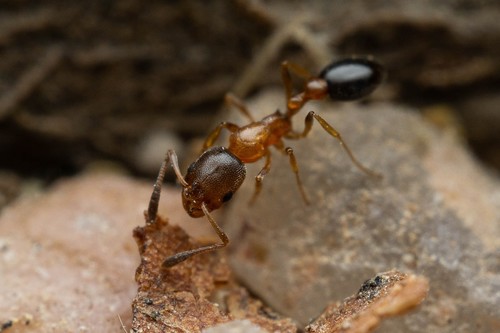
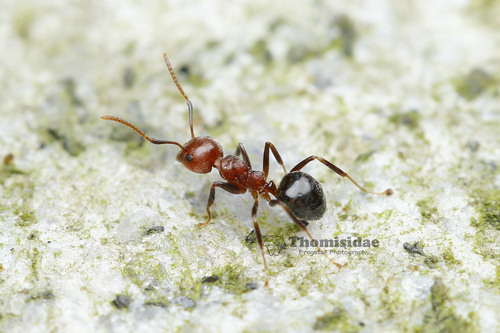
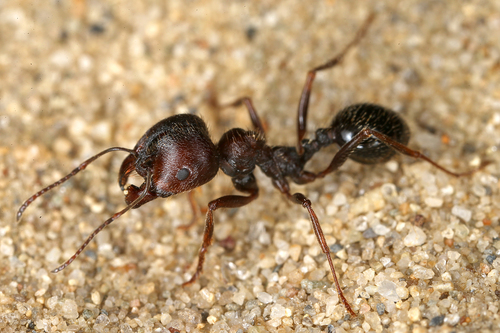
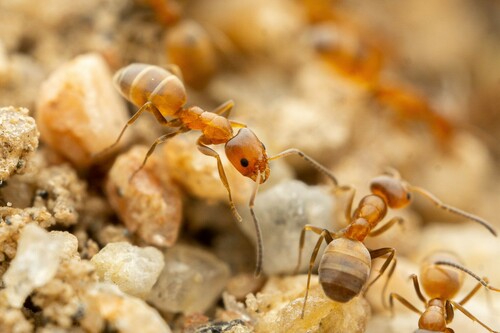
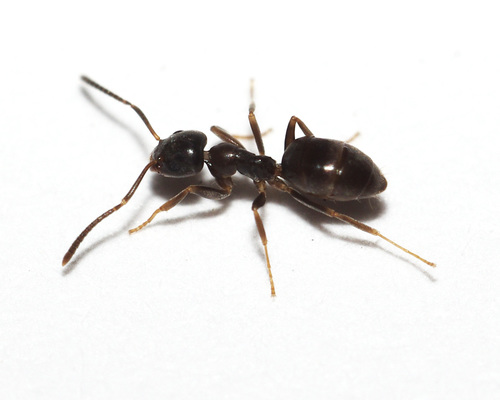
Tapinoma sessile (Say, 1836) is a small ant species that ranges in color from brown to black, and varies in adult length from 1⁄16 to 1⁄8 inches (1.5–3.2 mm). When crushed, these ants release a distinct odor, which has earned them the common nickname "odorous house ant" or "stink ant". A key distinguishing feature of this species, separating it from other small, dark, invasive ants, is the positioning of the gaster (the final portion of the abdomen): the gaster sits directly on top of the abdominal petiole. This arrangement results in a very small petiole and a downward-pointing gaster, with the anal pore opening ventrally (toward the front of the abdomen) rather than distally (at the tip of the gaster). The antennae of T. sessile have 12 segments. For its life cycle, eggs laid by queens incubate for 11 to 26 days. After hatching, the larval stage lasts 13 to 29 days, and the combined pre-pupal and pupal stages last 10 to 24 days. Little confirmed information exists about the full lifespan of this species, but observations confirm queens live at least 8 months (and likely much longer), workers live at least a few months and show evidence they may live as long as queens, while males only live approximately one week. T. sessile is native to North America, with a range extending from southern Canada to northern Mexico. It is less common in the desert southwest of the continent. T. sessile forms polydomous colonies, meaning a single colony occupies multiple separate nests. Foraging worker ants collect food from areas around nest sites and bring it back to the colony to share with other colony members. The polydomous colony structure makes T. sessile very effective at foraging when food resources are unevenly distributed. Instead of forcing foragers to travel long distances back to a single central nest to deliver food, the colony moves workers, queens, and brood closer to new food sources to reduce the energy cost of food transport. This foraging strategy is called dispersed central-place foraging. Studies have found the half-life of a colony's stay at any single nest is approximately 12.9 days. Researchers Buczkowski and Bennett studied the pattern of food movement within T. sessile nests by labeling sucrose with Immunoglobin G (IgG) proteins, then tracking the food using enzyme-linked immunosorbent assay (ELISA). They found food is spread through trophallaxis, the process where one ant regurgitates food to share with another. Even though food is spread via trophallaxis, workers retain most of the sucrose they collect. The study also found that some queens receive more food than others, which suggests a dominance hierarchy exists even between multiple queens in a single colony. Nests are connected by a system of trails, and the placement of nests depends on the location of food patches and the distance between these patches. The rate of trophallactic feeding depends on both the number of ants in a nest and the quality of available food. When the number of food donor ants stays constant but the total number of individuals in the nest increases, more individuals test positive for the food marker, which means more individuals eat, but each individual consumes a smaller amount of food. When the number of donor ants is doubled and the total colony population size increases, the number of individuals receiving food more than doubles. This again shows that while more individuals get food, the per capita amount of food consumed decreases. When T. sessile forages, it uses two types of orientation. Primary orientation occurs when ants explore new terrain without guidance from existing odor trails. When orienting in an unexplored area, ants often rely on topography. They primarily use four types of surface topography for orientation: bilaterally elevated, bilaterally depressed, unilaterally elevated, and unilaterally depressed surfaces. Ants orient along these surface features to lay the first odor trails, which other colony members can later follow to reach established food sources. Secondary orientation occurs when ants move through already explored terrain, using pre-existing odor trails for orientation.