About Tangara gyrola (Linnaeus, 1758)
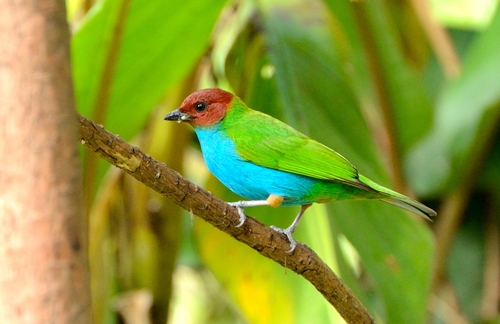
Adult bay-headed tanagers (Tangara gyrola) measure 14 cm in length and weigh an average of 19.5 g. The nominate subspecies T. g. gyrola is mostly green, with a distinct chestnut-colored head, a blue or green belly, and a thin golden collar on the hind neck. Males and females have similar plumage, while immature individuals are duller and have green heads flecked with chestnut. Plumage varies considerably across different subspecies: T. g. viridissima, found in northeast Venezuela and Trinidad, has green underparts that match the color of the rest of its body plumage. The song of the bay-headed tanager is a slow sequence of seee, seee, seee, tsou, tsooy. This species lives in forests, especially in wetter forest regions. It builds bulky cup-shaped nests in trees, and a typical clutch contains two white eggs marked with brown blotches. The female incubates the eggs for 13 to 14 days until hatching, and chicks fledge 15 to 16 days after hatching. Bay-headed tanagers are social birds. Their diet consists mainly of whole fruit, and they also eat insects, which they mostly gather from the undersides of branches.