About Tanacetum parthenium (L.) Sch.Bip.
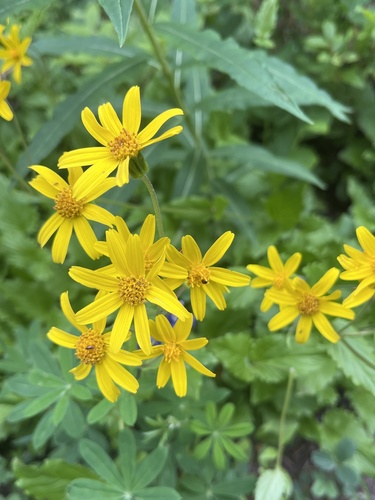
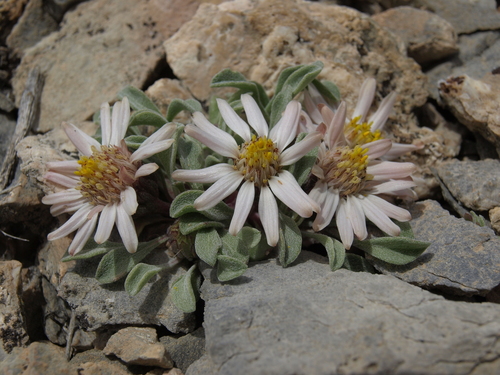
Tanacetum parthenium (L.) Sch.Bip., commonly known as feverfew, is a herbaceous perennial plant that grows into a small bush reaching up to 70 cm (28 in) in height. It has pungently-scented, light yellowish-green leaves that are variously pinnatifid. Its conspicuous daisy-like flowers grow up to 20 millimetres (3⁄4 in) across, and are borne in lax corymbs. The outer ray florets have white ligules, while the inner disc florets are yellow and tubular. The plant produces achene fruit. It spreads rapidly by seed, and can cover a wide area within a few years. It naturally grows on stony slopes and in river beds. Feverfew is native to Eurasia, specifically the Balkans, Anatolia, and the Caucasus, but cultivation has spread it around the world. For cultivation, it is a perennial herb that prefers full sun, and should be planted 38 to 46 cm (15–18 in) apart. It grows up to 70 cm (28 in) tall, and is hardy to USDA zone 5 (−30 °C or −22 °F). Outside of its native range, it may become an invasive weed. Identified phytochemicals in feverfew include parthenolide, camphor, and the flavonoids luteolin and apigenin. Feverfew has been used in traditional medicine, particularly in Europe, where an herbal monograph mentions it as a safe compound. There is no high-quality evidence supporting its use for treating migraine headaches or any other clinical condition. Long-term use of feverfew followed by abrupt discontinuation may cause a withdrawal syndrome, including rebound headaches and muscle and joint pains. Feverfew may trigger allergic reactions in people allergic to the daisy family, such as contact dermatitis, or swelling and numbness of the mouth. Other reported side effects are mild and transient gastrointestinal issues, including mild nausea, vomiting, abdominal pain, diarrhea, and flatulence. Chewing or taking feverfew orally may cause mouth ulcers. Feverfew should not be used by pregnant people. It can interact with blood thinners to increase bleeding risk, and may also interact with a range of medications metabolized by the liver.