About Tagetes lunulata Ortega
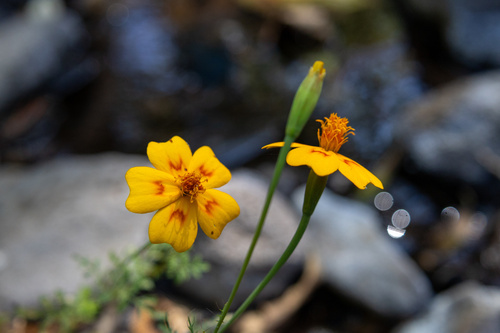
This description covers general characteristics of the Tagetes genus, which includes Tagetes lunulata Ortega. Tagetes species vary in height from 0.1 to 2.2 meters tall. Most species have green pinnate leaves. Their natural blooms come in golden, orange, yellow, and white colors, often with maroon highlights. Flower heads typically measure 4 to 6 cm in diameter (with some as small as 1 cm across), and generally have both ray florets and disc florets. In horticulture, most Tagetes are planted as annuals, though perennial species are growing in popularity. Like all marigolds, Tagetes have a fibrous root system. Depending on the species, Tagetes can grow well in almost any type of soil. Most horticultural selections grow best in well-drained soil, and some cultivars have good drought tolerance. Cultivation and uses: Depending on the species, marigold foliage has a musky, pungent scent, though some varieties have been bred to be scentless. Roots of Tagetes exude antibacterial thiophenes, so Tagetes should not be planted near legume crops. Some perennial Tagetes species are resistant to deer, rabbits, rodents, javelina, and peccary. Tagetes minuta, also called khakibush or huacatay and originally native to South America, is used as a source of essential oil called tagette or "marigold oil" for the perfume industry, and also used as a flavourant in the food and tobacco industries. It is commonly cultivated in South Africa, where it also acts as a useful pioneer plant for reclaiming disturbed land. The florets of Tagetes erecta are high in the orange-yellow carotenoid lutein, and are used as a food colour (INS number E161b) in the European Union for foods including pasta, vegetable oil, margarine, mayonnaise, salad dressing, baked goods, confectionery, dairy products, ice cream, yogurt, citrus juice and mustard. In the United States, Tagetes powders and extracts are only approved for use as colorants in animal feed. Marigolds are a recorded food plant for some Lepidoptera caterpillars, including the dot moth, and a nectar source for other butterflies and bumblebees. They are often included in butterfly gardening plantings. In the wild, many Tagetes species are pollinated by beetles.