About Tagetes lucida Cav.
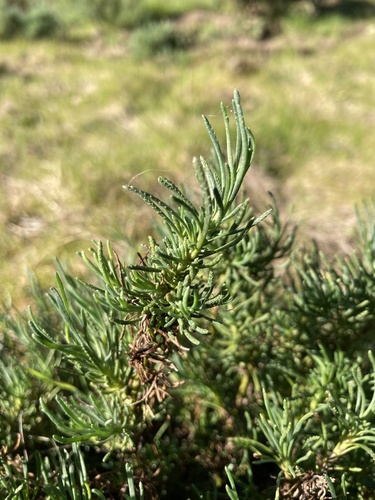
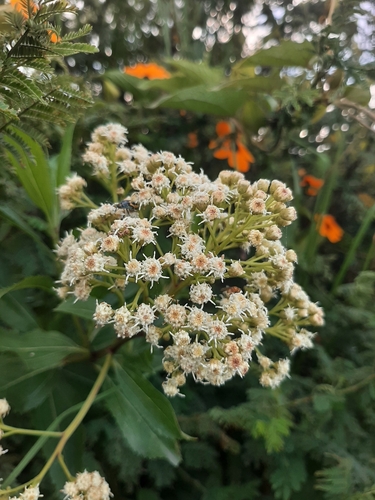
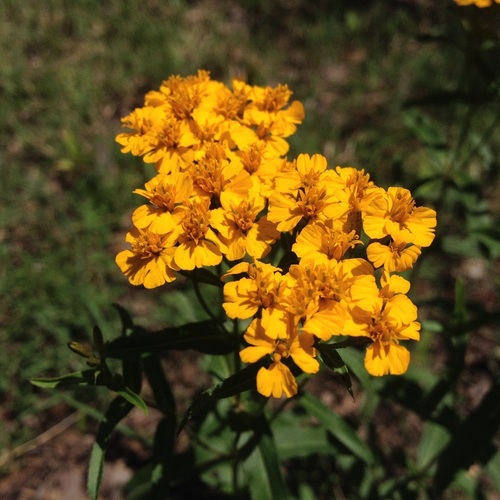
Tagetes lucida Cav. grows 45–75 cm (18–30 in) tall, and requires growing conditions of full sun to light shade. Depending on the variety or landrace, the plant may be fairly upright, while other forms grow bushy with many unbranching stems. Its leaves range in shape from linear to oblong, are about 7.5 cm (3 in) long, and have a shiny medium green color, unlike the blue-green leaves of French tarragon (Artemisia dracunculus var. sativa). In late summer, it produces clusters of small golden yellow flower heads at the ends of its stems. The flower heads are approximately 15 mm (1⁄2 in) across, and hold 3–5 golden-yellow ray florets. The flowers are hermaphroditic, meaning they have both male and female organs, and are pollinated by insects. The Aztecs used Tagetes lucida in a ritual incense called Yauhtli, and the plant was dedicated to the Aztec rain god Tlāloc. It remains in use today, most commonly prepared as a tea to treat the common cold, intestinal gas, and diarrhea. Reports note that the Huichol people of Mexico use the plant as an entheogen, smoking it mixed with Nicotiana rustica; it is also occasionally smoked alone as a hallucinogen. Archaeologists have discovered evidence that the Maya added Tagetes lucida as an ingredient to tobacco mixtures. The Aztecs also used the plant for many culinary purposes, including adding it as an ingredient to the drink chocolatl to give it a spicy flavor. Fresh or dried leaves of Tagetes lucida are also used as a tarragon substitute to flavor soups and sauces. An enjoyable anise-flavored tea can be brewed from the plant's dried leaves and flower heads; this tea is primarily used for medicinal purposes in Mexico and Central America. A yellow dye can be obtained from the plant's flowers. When dried and burned, the plant is used as incense and to repel insects. One study found that a methanolic extract from the flower inhibited the growth of Staphylococcus aureus, E. coli, and Candida albicans cultures, and this inhibitory effect was enhanced when the extract was exposed to ultraviolet light. The plant's roots, stems, and leaves showed the same growth-inhibiting effect when irradiated with ultraviolet light.