About Tabernaemontana donnell-smithii Rose ex J.D.Sm.
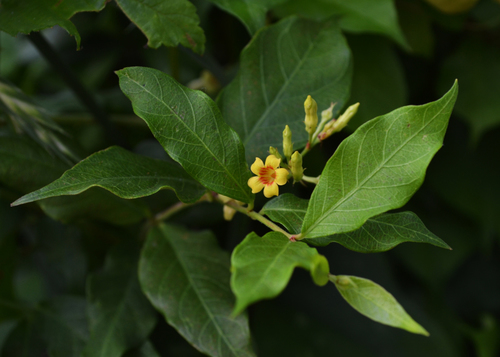
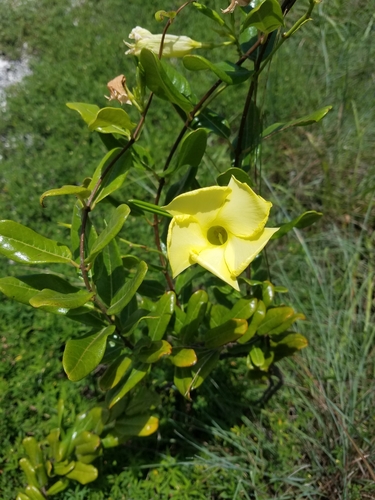
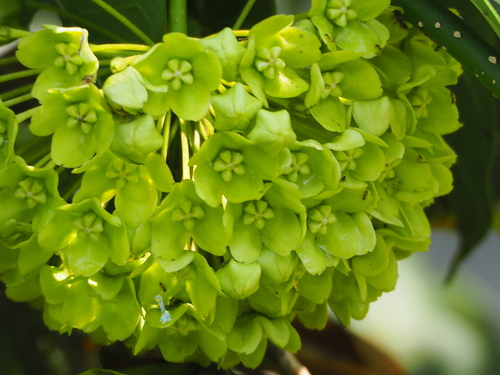
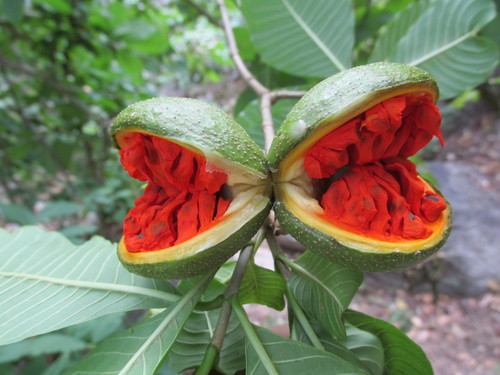
Tabernaemontana donnell-smithii, the commonly called horse balls tree, is an evergreen tree that belongs to the dogbane family Apocynaceae. In Spanish, it goes by the names huevos de caballo, cojones de burro, cojón de mico, or cojotón; the name huevos de caballo comes from the oval shape of this tree's hanging fruit. This species is native to Mexico and Central America, and its type locality is San Felipe, Retalhuleu, Guatemala. It is similar to the related species Tabernaemontana glabra, but differs in having smaller leaves and smaller flowers, along with larger fruit. It grows in a wide variety of habitats, including multiple types of forest, forest edges, and pastures. It can reach a maximum height of 20 metres (66 ft), though its mature height is partially dependent on the habitat it grows in. Trees growing in secondary growth areas, forest edges, and pastures are typically shorter and broader than trees that grow in closed forest. Its flowers are yellow, and they can bloom at different times of year depending on the location the tree grows in. Foster and McDiarmid documented that this tree produces slow-growing fruit that measures around 7 to 10 centimetres (2.8 to 3.9 in) long and has an average weight of roughly 143 grams (5.0 oz). The fruit is covered by a woody husk that makes up more than three-quarters of the fruit's total weight. When the fruit is ready to open, a slit forms in the husk that gives access to the arils, each of which surrounds a single seed. The fruit of Tabernaemontana donnell-smithii is eaten by birds including parrots, as well as by white-headed capuchins, while the seeds are eaten by birds such as flycatchers, motmots, honeycreepers, manakins, and woodpeckers. Many bird species that are primarily insectivorous eat this fruit opportunistically late in the dry season, which is when most of this tree's fruit ripens and when insect populations are relatively scarce. This species' seeds are dispersed primarily by birds. A study conducted by McDiarmid, Ricklefs, and Foster found that birds also help the seeds germinate, both by removing the arils from the seeds and by scarifying the seeds. The bark of Tabernaemontana donnell-smithii contains the alkaloids tabernanthine and voacamine, while its seeds contain the alkaloids coronaridine and tabersonine.