About Tabebuia roseoalba (Ridl.) Sandwith
Tabebuia roseoalba, commonly known as the White Tabebuia or White Trumpet Tree, is a flowering tree species native to South America. It belongs to the Bignoniaceae family and can grow up to 20 meters tall.
Trunk and Flower Features
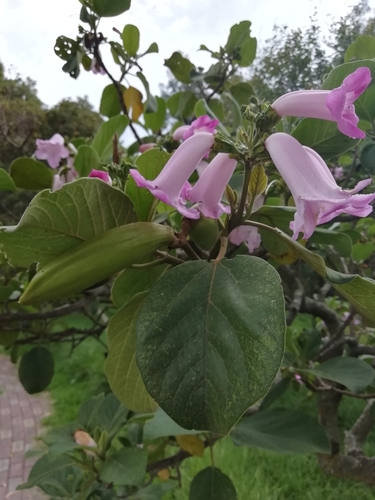
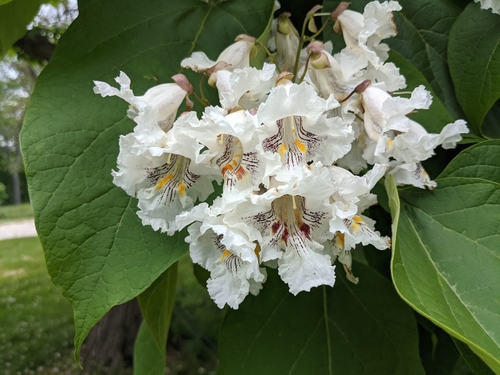
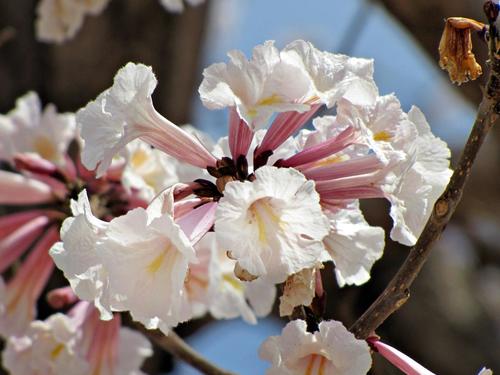
The tree has a straight trunk covered in grayish-brown bark and produces large, trumpet-shaped flowers that are either white or pale pink.
Leaf Characteristics
The leaves are deciduous and compound, consisting of five green leaflets.
Native Range
The White Tabebuia is commonly found in tropical regions of South America, including Brazil, Bolivia, Paraguay, and Argentina.
Growth Preferences
It prefers well-drained soils and can tolerate drought conditions once established.
Anti-inflammatory Properties
The tree has various medicinal properties, such as anti-inflammatory effects due to its high content of lapachol compounds found in its bark extracts.
Respiratory Treatment Uses
Additionally, it is used to treat respiratory problems like asthma because of its bronchodilator properties.
Ornamental Value
Tabebuia roseoalba is also popular for ornamental purposes due to its beautiful springtime blooms, making it an attractive addition to gardens and parks.
Overall, this plant species holds great significance both medicinally and aesthetically, making it a fascinating plant worth exploring further.