About Synsepalum dulcificum (Schumach. & Thonn.) Daniell
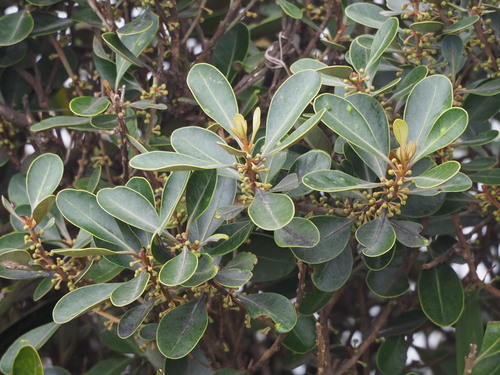
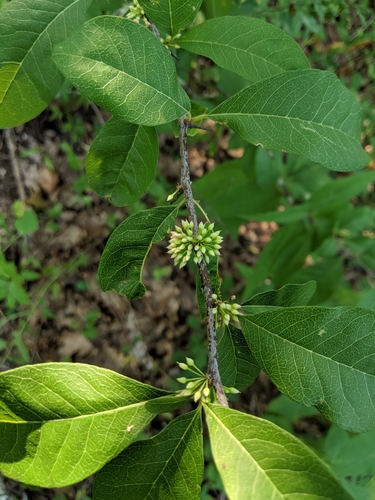
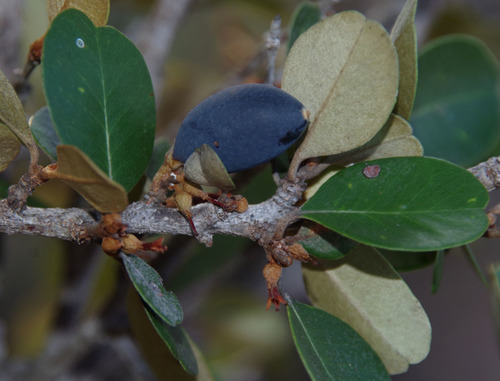
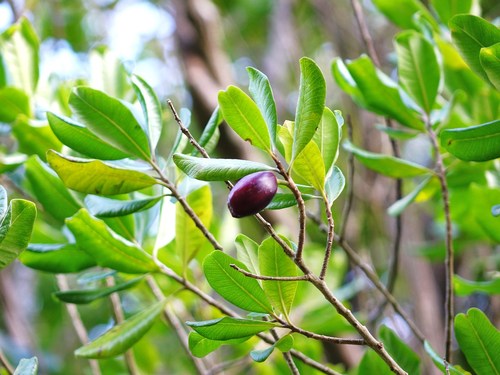
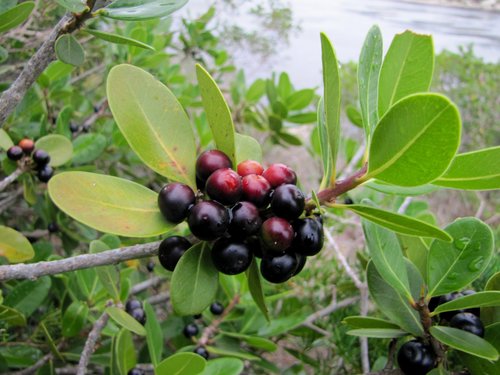
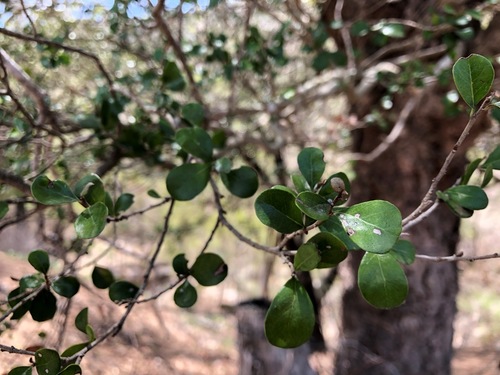
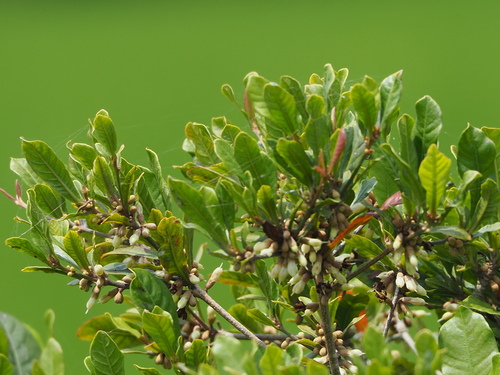
Synsepalum dulcificum, also known as miracle berry, is an evergreen shrub that reaches 1.8–4.5 m (5.9–14.8 ft) in height, with dense foliage. Its leaves measure 5–10 cm (2.0–3.9 in) long and 2.0–3.7 cm (0.79–1.46 in) wide, are glabrous on their lower surface, and cluster at the ends of branchlets. This species produces white flowers that bloom for many months out of the year, followed by red fruits that are 2 cm (0.79 in) long. Each fruit contains a single seed that is roughly the size of a coffee bean. For cultivation, this plant grows best in acidic soil with a pH between 4.5 and 5.8, in a frost-free environment with partial shade and high humidity. It is tolerant of drought, full sunshine, and sloped terrain. Seeds of this species take 14 to 21 days to germinate. A 4 m (13 ft) spacing between individual plants is recommended for cultivation. Plants first produce fruit after 3–4 years of growth, and yield two crops annually, each harvested after the end of the rainy season. Common pests and pathogens that affect this plant include: lepidopterous larvae that feed on its leaves in its native African range; fruit fly larvae that infest its fruits; and the fungus Rigidoporus microporus, which has been found growing on the species. Research projects have developed transgenic tomato plants that produce miraculin, the active compound found in Synsepalum dulcificum. This species is native to tropical West Africa, where its fruit pulp is traditionally used to sweeten palm wine. Historically, it was also used to improve the flavor of soured cornbread. More recently, it has been used as a sweetener and flavoring agent for a wide range of foods and beverages, including beer, cocktails, vinegar, and pickles. Regulatory status of Synsepalum dulcificum varies by region. Since 2011, the United States Food and Drug Administration has banned imports of Synsepalum dulcificum (specifically the compound miraculin) originating from Taiwan, classifying it as an illegal undeclared sweetener; this ban does not apply to imports from other countries. In 2021, Spanish company Baïa Food Co. received approval to market Dried Miracle Berry in the European Union.