About Synoum glandulosum (Sm.) A.Juss.
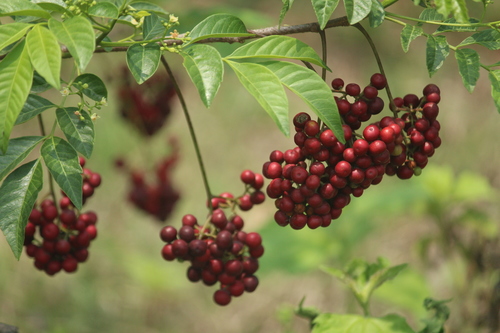
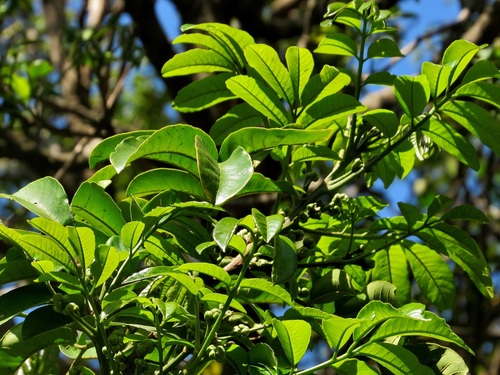
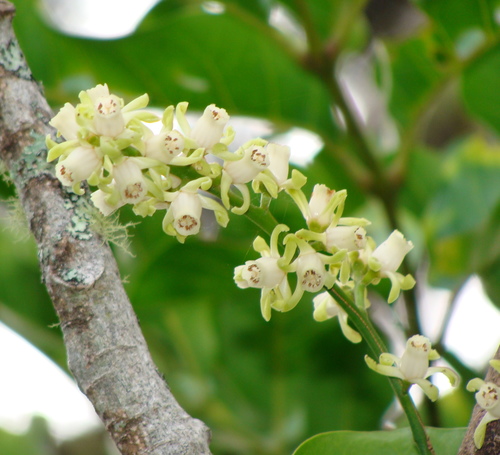
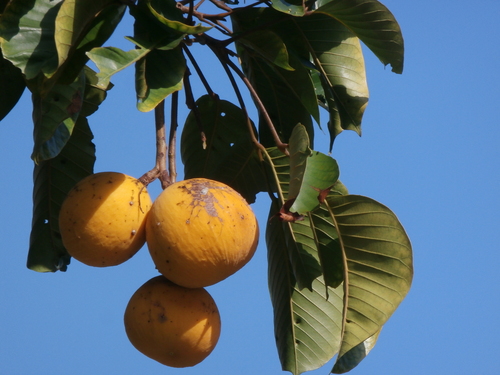
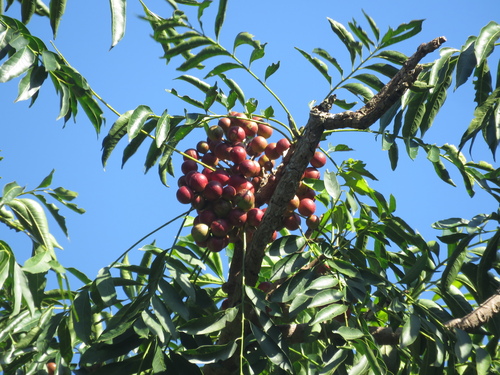
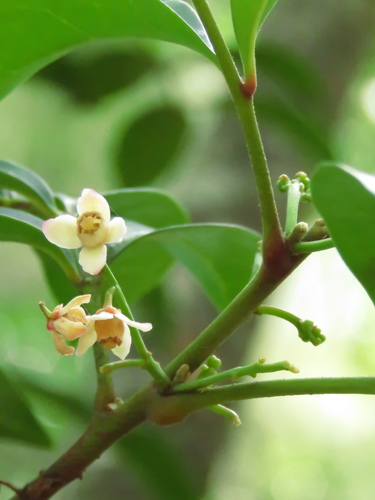
Synoum is a monotypic genus of evergreen tree in the family Meliaceae. The entire genus is endemic to Australia, growing along the eastern subtropical to tropical coast in Queensland and New South Wales, most often on the margins of rainforests. This genus was first described by French naturalist Adrien-Henri de Jussieu in 1830. The only recognized species in the genus is Synoum glandulosum, which is commonly known as scentless rosewood. Scentless rosewood resembles the related genus Toona, but differs in leaf structure: Synoum glandulosum leaves have 5 to 9 leaflets, while Toona leaves have 8 to 20 leaflets. This species is dioecious, meaning individual plants bear only male or only female flowers. Its fruit is a reddish three-lobed capsule that matures between December and January, holding two or three seeds each surrounded by a red aril. Germination from fresh seed is reliable and relatively fast. The timber of Synoum glandulosum is used as sawn timber in local construction for general house framing, flooring, mouldings, and joinery. Additional uses include furniture, shop and office fixtures, panelling, turnery, carving, structural plywood, scaffold planks, wood wool, paper products, particleboard, and medium density fibreboard.