About Symphyotrichum lateriflorum (L.) Á.Löve & D.Löve
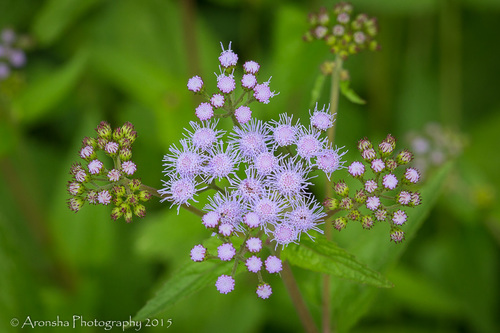
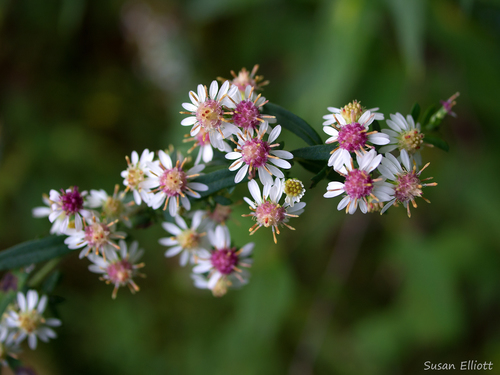
Symphyotrichum lateriflorum (also called calico aster) is a clump-forming herbaceous perennial plant with alternate leaves. It grows 20–120 centimeters (3⁄4–4 feet) tall and up to 30 cm (1 foot) wide, and its appearance can change over its lifespan or through a growing season. Mature, returning, or late-season plants often grow one or more stiff stems close to their maximum height, with several arching branches and multiple flower clusters called inflorescences. Early-growth or first-year plants typically have one short, somewhat floppy stem, several large leaves, and end abruptly with a single flower head at the center.
In the wild, this species is native to all of its current North American range. It has been found in every U.S. state east of the Mississippi River, all states on the west bank of the Mississippi (Minnesota, Iowa, Missouri, Arkansas, and Louisiana), and the western U.S. states of South Dakota, Nebraska, Kansas, Oklahoma, and Texas. In Canada, it grows in the provinces of Manitoba, Ontario, Quebec, New Brunswick, and Prince Edward Island. In Mexico, it occurs in the state of Veracruz. The USDA PLANTS Database notes it has been recorded in British Columbia, but the Flora of North America describes it as an ephemeral there that did not persist. Individual varieties have recorded distributions as follows: S. lateriflorum var. angustifolium is found in Ontario, all of the U.S. New England region except Rhode Island, and the U.S. states of Indiana, Kentucky, Michigan, New Jersey, New York, and Wisconsin; S. lateriflorum var. flagellare is documented in Oklahoma and Texas; S. lateriflorum var. hirsuticaule is documented in Ontario, Nova Scotia, Prince Edward Island, and New Brunswick (most databases classify this as a taxonomic synonym rather than a valid variety, so no United States distribution data is available); S. lateriflorum var. horizontale is found in New Brunswick, all U.S. states east of the Mississippi except Indiana, Ohio, Virginia, South Carolina, and Louisiana, and west of the Mississippi in Minnesota, Missouri, and Arkansas; S. lateriflorum var. spatelliforme is found in Florida; and S. lateriflorum var. tenuipes is known from Nova Scotia, Prince Edward Island, Maine, Michigan, New Hampshire, New York, and Vermont. Outside of North America, S. lateriflorum is reported as an introduced species in Belgium, France, Italy, and Switzerland. As of July 2021, it was not included on the European Union's List of invasive alien species of Union concern.
Symphyotrichum lateriflorum can grow in a wide variety of habitats, ranging from wet to dry-mesic woodlands and savannas, floodplain woodlands, fens, marshes, wet to wet-mesic prairies, and old fields with a high water table. It also grows on banks, in thickets, and on shores, usually in rather dry conditions, but it also grows in damp or even wet sandy or gravelly soil. It is listed on the United States National Wetland Plant List (NWPL) with two different Wetland Indicator Status Ratings: Facultative Wetland (FACW) and Facultative (FAC), depending on the wetland region. In the Atlantic and Gulf Coastal Plain (AGCP) and Northcentral and Northeast (NCNE) regions, it is classified as a Facultative Plant (FAC), meaning it can grow in both wetlands and non-wetlands and adjust accordingly. In the Eastern Mountains and Piedmont (EMP), Great Plains (GP), and Midwest (MW) regions, it is classified as a Facultative Wetland Plant (FACW), meaning it usually grows in wetlands, but is not restricted to them, and may occasionally grow in non-wetlands.
Associated plant species vary based on the growing environment. Naturally occurring native North American tree species that often grow nearby include silver maple (Acer saccharinum), boxelder (Acer negundo), common hackberry (Celtis occidentalis), downy hawthorn (Crataegus mollis), the critically endangered green ash (Fraxinus pennsylvanica), common elderberry (Sambucus canadensis), and the endangered American elm (Ulmus americana). Companion Symphyotrichum species include Drummond's aster (S. drummondii), shining aster (S. firmum), panicled aster (S. lanceolatum), New England aster (S. novae-angliae), and purplestem aster (S. puniceum).
Symphyotrichum lateriflorum is considered a weed species in both Canada and the United States, but is not classified as a noxious weed in either country. Canadian botanists Jerry G. Chmielewski and John C. Semple described it as "probably the least weedy of the weedy aster species in Canada". Its coefficients of conservatism (C-value) in Floristic Quality Assessment (FQA) range from 1 to 10, depending on the evaluation region. A lower C-value means the species has a higher tolerance for disturbance, and is less likely to be found growing in undisturbed remnant habitat with intact native flora and fauna. For example, in the Atlantic coastal pine barrens of Massachusetts, New York, and Rhode Island, it has a C-value of 1, meaning its presence in that ecoregion gives little or no confidence that the location is a remnant habitat. In contrast, in the Dakotas, it has a C-value of 10, meaning its populations there are not weedy and are restricted only to remnant habitats with very low tolerance for environmental degradation.
Symphyotrichum lateriflorum's primary method of reproduction is cross-pollination, which is required for viable seed production, and is carried out by short or mid-length tongued insects that can successfully manipulate its small flower heads to transfer pollen between plants. Occasional self-pollination only produces a small number of viable seeds. As an adaptive trait, its flower heads "go to sleep" at night, closing the ray florets around the disk florets, which may help protect and preserve the pollen inside. It can also reproduce through cloning via its short rhizome structure. This usually forms small groups rather than large colonies, because S. lateriflorum does not form large colonies, and vegetative reproduction most often occurs within an existing clump.
In the Symphyotrichum genus, ray florets are exclusively female: each has a pistil (with style, stigma, and ovary) but no stamen. They accept pollen, can each develop a seed, and produce no pollen. The ray florets of S. lateriflorum bloom earlier and are likely receptive to pollen for longer than its disk florets. Each ray floret has three petals fused into a single corolla, with one ovary containing one ovule at the base. A style attached to the ovary extends outward between the ray floret corolla and the rest of the flower head. As the ray floret blooms, the stigma at the top of the style splits into two lobes to allow pollen to reach the ovary.
Disk florets in the Symphyotrichum genus are androgynous, meaning each has both male (stamen, anthers, and filaments) and female reproductive parts, so a disk floret produces pollen and can also develop a seed. The disk floret has five petals (sometimes called lobes) fused into a tube-shaped corolla. When an S. lateriflorum disk floret blooms, the corolla lobes separate to 50–75% of the total length of the corolla. The male stamen sits inside the tube-shaped corolla, and has five anthers and five filaments that produce pollen. In this genus, the anthers and filaments are fused together to form a cylindrical tube with pollen only on the inside (unlike in non-Asteraceae species, where they are clearly separate). This male anther cylinder surrounds the female style and stigma. As the style matures, it elongates upward through the anther cylinder, gathering pollen onto its stigma as it grows. The ovary sits at the bottom of the disk floret style. Like with ray florets, the disk floret stigma has two lobes that are fused together. The stigma stays closed while pollen is on it, to protect the ovary from self-pollination. After pollen has been collected and carried away by pollinators, the stigma splits into two lobes, opening the style so the ovary can receive pollen from another plant. Once pollination is complete, seeds ripen in 3–4 weeks, hardening and developing pappi. They are then dispersed by wind, and usually carry their dried corollas with them when they depart.
Documented traditional medicinal uses of this plant exist among Indigenous peoples of North America. In 1928, ethnobotanist Huron Herbert Smith recorded that the Meskwaki people used this plant as a psychological aid: they used the blossoms as a smudge "to cure a crazy person who has lost his mind", and used the entire plant as a smoke or steam in a sweatbath. In Meskwaki the plant is called no'sîkûn, and in Potawatomi it is called pûkwänä'sîkûn; both words translate to "smoke a person". In her 1979 book Use of Plants for the Past 500 Years, Charlotte Erichsen-Brown documented that the Mohawk people use an infusion of this plant combined with Symphyotrichum novae-angliae to treat fever.