About Sympetrum pedemontanum (Müller, 1766)
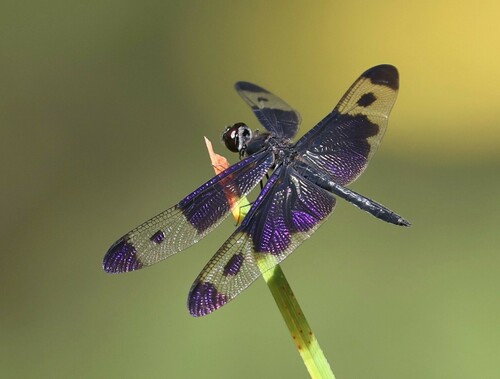
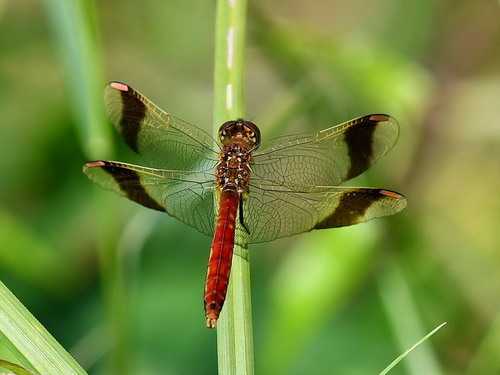
Sympetrum pedemontanum, commonly called banded darters, are smaller than most dragonfly species, with an average size under 40 millimeters. They get their common name from the dark bands that mark their wings. Bands on the hind wings are usually slightly wider than those on the fore wings. Band size, shape, and position vary across different age groups, locations, and populations; wider bands are found in western parts of the species' range, while the brightest bands occur in the north. The color intensity of the bands increases as the dragonfly ages, and body color also changes with age. Juveniles typically have yellow bodies; as males mature, their body color turns red. Adult females generally have yellowish bodies, while adult males are red or brownish red. Like most dragonflies, S. pedemontanum is diurnal, and its compound eyes can detect colors and process high-resolution images. Distinctive features of the species include the male's red body, the female's yellow body, black markings on the thorax, abdomen, and legs, a well-developed raised posterior lobe, and the characteristic banded wings. Females can sometimes be confused with males of the species Orthetrum anceps because of their similar yellow body color, but O. anceps can be easily distinguished by its antehumeral stripes that S. pedemontanum lacks. This species is widespread across Eurasia and commonly cohabits in artificial habitats. It is often found in irrigated hay meadows, semipermanent marshlands, rice paddy fields, and grasslands. It prefers banks with relatively low vegetation cover, and tends to live around trimmed grass and bodies of water, because this is where it lays eggs. Banded darters lay their eggs in stagnant or slow-flowing shallow water. Like other members of the genus Sympetrum, this species can detect horizontally polarized reflected light, which helps it locate bodies of water to inhabit. Sympetrum pedemontanum has fluctuating, cyclical population growth. Males show weak territoriality, and form tandem pairs with females. While the male guards her, the female dips her abdomen into water to lay eggs. This differs from many other Sympetrum species, which are known to use terrestrial oviposition. Sympetrum eggs are laid in summer, and typically hatch after 80 to 230 days. The eggs overwinter, and larvae hatch the following summer. After larvae mature, adults emerge in summer, with juveniles maturing by mid-summer. In Europe, adult banded darters can be seen from mid-July to the end of October.