About Suriana maritima L.
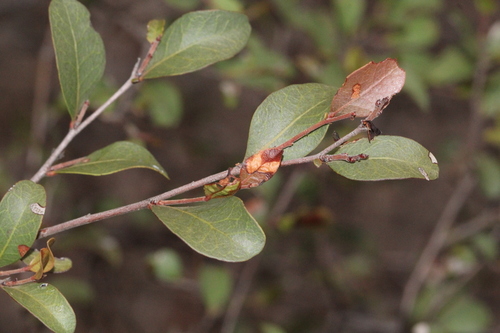
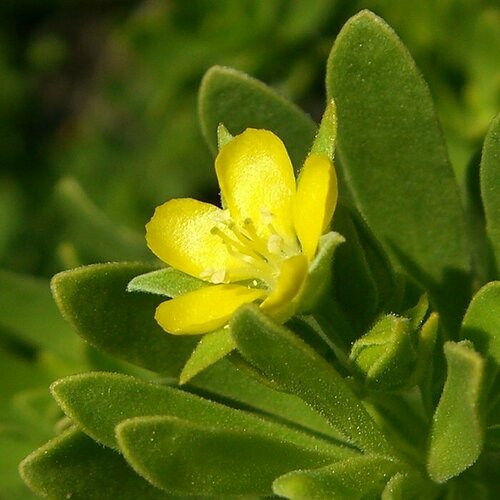
Suriana maritima L., commonly known as bay cedar, is an evergreen shrub or small tree. It typically grows 1 to 2 meters (3.3 to 6.6 feet) tall, and occasionally reaches up to 6 meters (20 feet) in height. Its leaves are alternate and simple, measuring 1 to 6 centimeters (0.39 to 2.36 inches) long and up to 0.6 centimeters (0.24 inches) wide. The grey-green, succulent foliage gives off an aroma similar to cedar when crushed, which is how the common name bay cedar originated. Bay cedar produces yellow flowers that grow either alone or in short cymes among its leaves. When open, the flowers have a diameter of 1.5 centimeters (0.59 inches), with petals 6 to 10 millimeters (0.24 to 0.39 inches) long and sepals 7 to 10 millimeters (0.28 to 0.39 inches) long. This species flowers year-round. After pollination and fertilization, flowers develop into clusters of five dry, hard drupes, each 3 to 4 millimeters (0.12 to 0.16 inches) in diameter. The drupes are buoyant, and can keep seeds viable for long periods of time in seawater, which lets ocean currents disperse the seeds. Bay cedar has a pantropical distribution, and grows along coasts in tropical regions of both the New World and Old World. It is native to south Florida, the Caribbean, Central America, South America, and parts of the Old World tropics. This plant is used for its aroma, and also grown as hedges and for landscaping.