About Suaeda nigra (Raf.) J.F.Macbr.
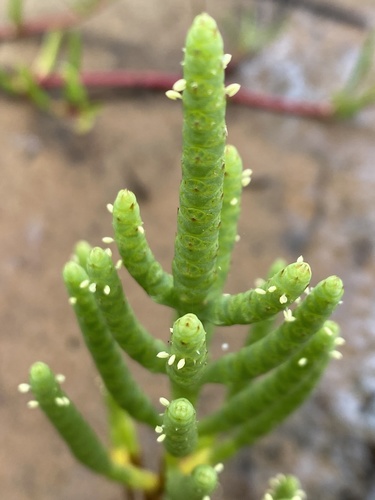
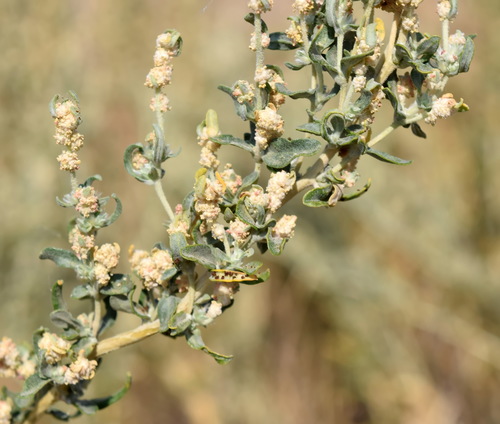
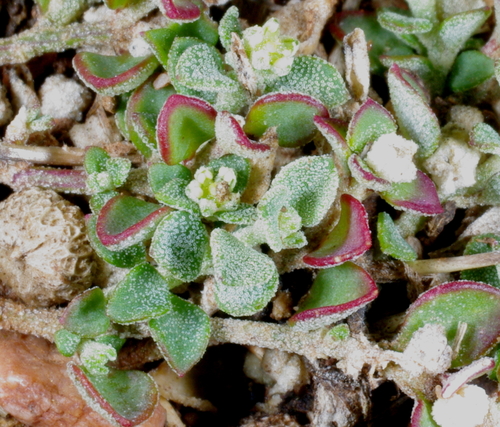
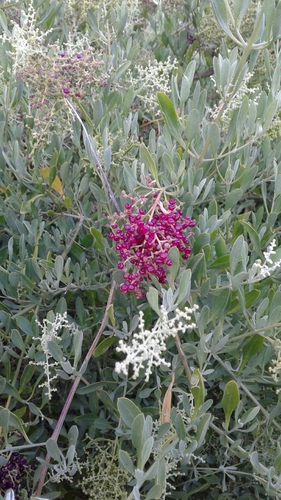
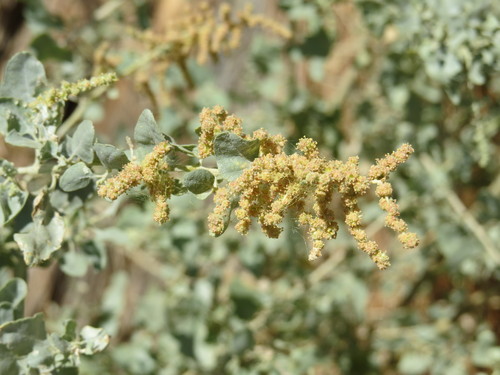
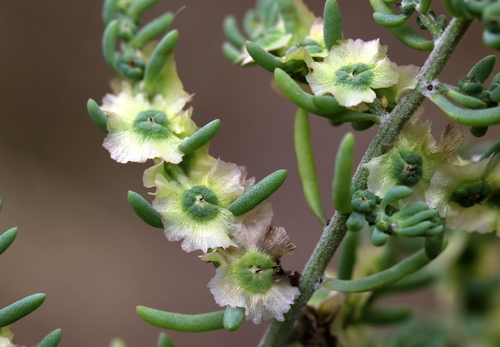
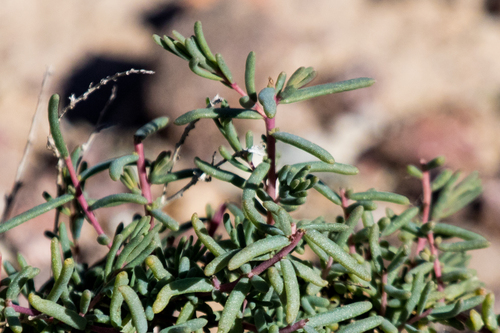
Suaeda nigra is a genetically diverse species with considerable variation in appearance. It takes the form of a shrub or subshrub that grows from a woody base, with many spreading branches, and can reach up to 1.5 metres (4.9 ft) in height. Plants growing in seasonally flooded wetlands may act as facultative annuals. Plants range from hairy to completely hairless, and are usually waxy in texture. Their color can range from green to red to dark purple, and is sometimes almost black. The leaves are succulent, linear to lance-shaped, 1 to 3 centimetres long, and either flat or cylindrical. Flowers grow in clusters along the upper stems, with each cluster holding 1 to 12 flowers. Leaf-like bracts grow alongside these flower clusters. The flowers have no petals, and are made up of a calyx of fleshy, rounded sepals. The fruit is an utricle that develops inside the calyx.
Suaeda nigra is native to most of western North America, ranging from central Canada through the Western United States, including the Great Basin and the Mojave Desert in California, and extending into northern Mexico. It grows in many habitat types that have saline or alkaline substrates, including desert flats, dry lakes locally called playas, and seeps. It is primarily an inland species, but can occasionally be found in coastal areas such as estuaries.