About Suaeda californica S.Watson
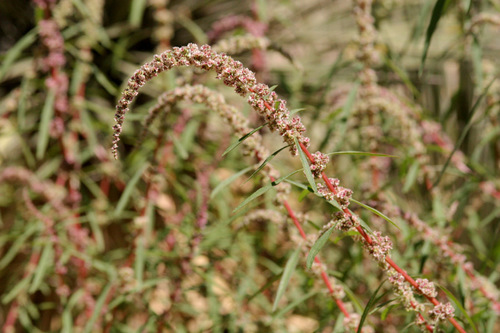
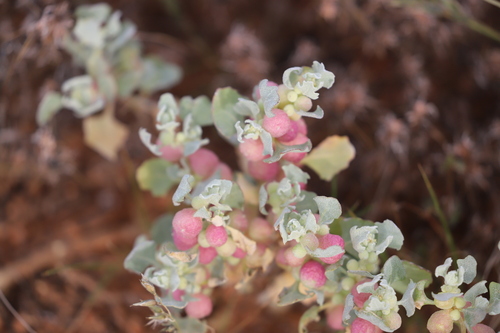
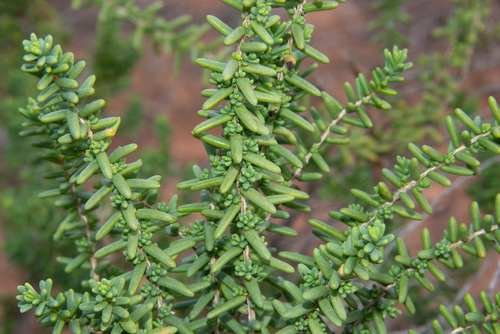
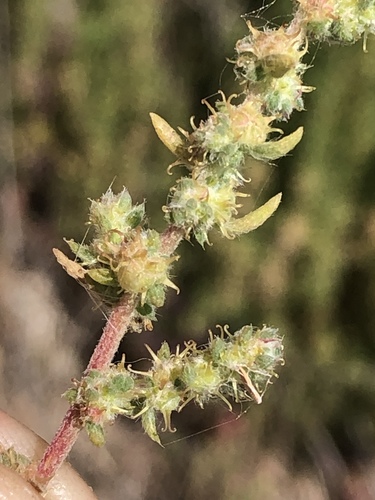
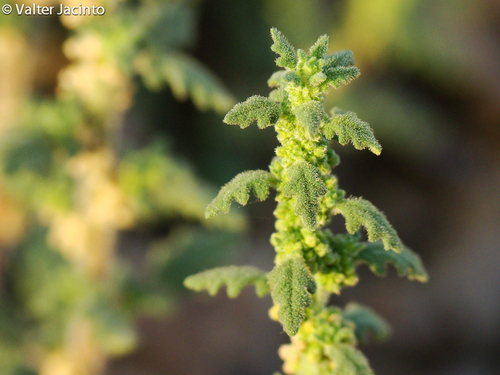
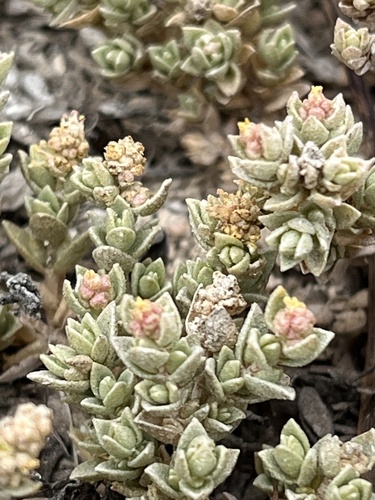
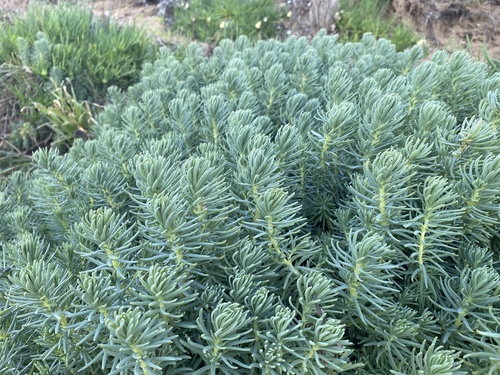
Suaeda californica is a mound-shaped shrub reaching up to 80 centimeters in height, with hairless or slightly hairy succulent herbage that is green or red-tinged. Its woody stems produce many branches covered in the knob-shaped bases of old leaves; new lance-shaped leaves grow between these bases, reaching up to 3.5 centimeters long. Flowers grow between the leaves all along the stems. Each flower cluster holds 1 to 5 flowers, accompanied by a leaf-like bract. The flower calyx forms a cone made of fleshy, rounded sepals, and the species has no petals. The fruit is an utricle that develops inside the calyx. This rare plant grows in a restricted area of the intertidal zone in salt marshes. It is threatened by any activity that alters local hydrology, including changes to sedimentation caused by dredging, erosion, and recreation. It requires a porous, nitrogen-rich substrate; nitrogen here may come from decaying plant matter and bird droppings. Introduced invasive plant species such as ice plant threaten existing populations and reintroduction efforts.