About Styrax japonicus Siebold & Zucc.
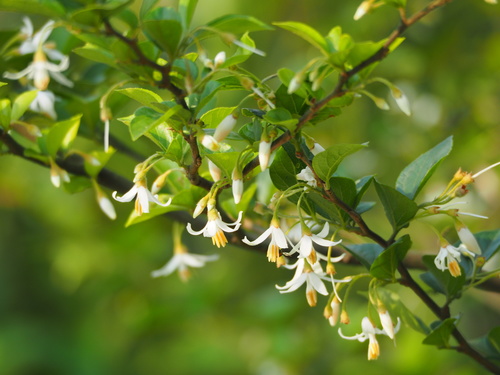
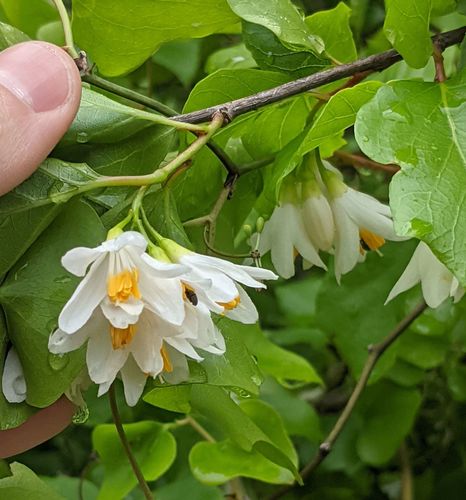
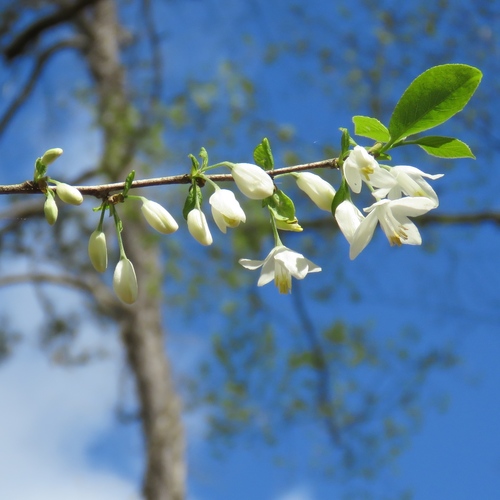
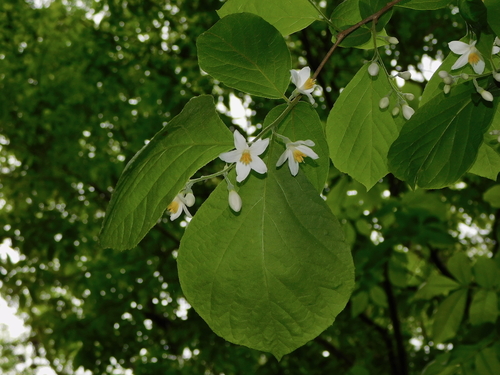
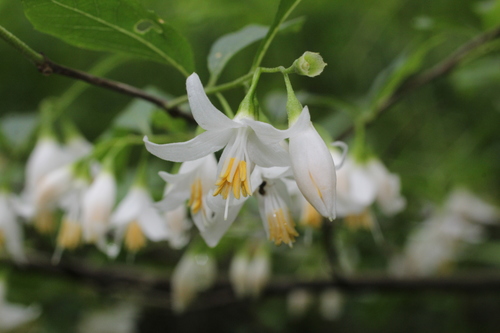
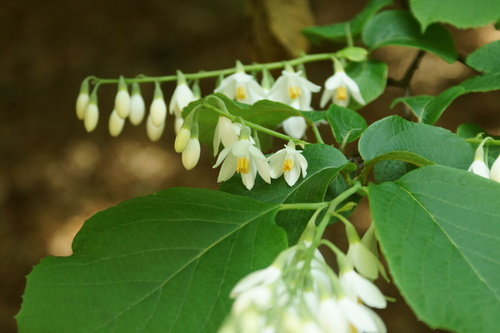
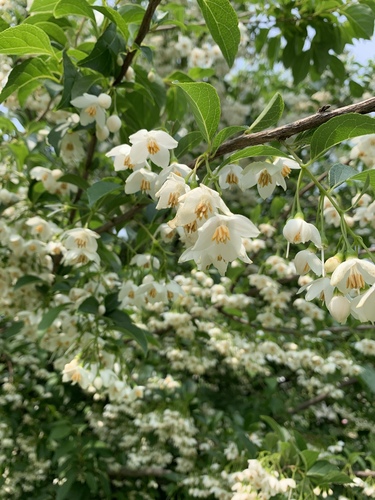
Styrax japonicus Siebold & Zucc. grows as either a large shrub or a small tree. This species is native to Korea, Japan, and Southern China, and has the largest distribution among all members of the genus Styrax. It is a popular attractive landscape tree, and is commonly found in parks and gardens. It is generally resistant to pests and diseases, though weaker individuals may be susceptible to attack by the ambrosia beetle. It is cold hardy to −15 °C (5 °F), and falls into USDA hardiness zones 5 through 8, with zone classification varying based on cultivation and seed source provenance. Styrax japonicus prefers acidic or neutral soil. It should be planted in locations with full sun or partial shade, protected from cold and dry wind, and provided with consistently moist soil. There are no known threats to the species' conservation status. The IUCN Red List of Threatened Species ranks Styrax japonicus as "Least Concern", with its most recent assessment taking place in 2019. The first introduction of Styrax to the Western world was carried out by Richard Oldham in 1862. Styrax japonicus is one of the most widely cultivated species in North American and European gardens, and is among the most common Styrax cultivars grown. Cultivars have been selected for pendulous growth habits, specific flower colors, dwarf growth, unique foliage colors such as burgundy leaves, and improved temperature tolerance. The Japanese Benibana Group refers specifically to pink-flowered cultivars, and includes the cultivar 'Pink Chimes'; Japanese gardeners use the term Beniego to describe this cultivar. The cultivar 'Fargesii', which produces larger flowers and leaves than the standard species, has been awarded the Royal Horticultural Society's Award of Garden Merit. Common registered cultivars of Styrax japonicus are: 'Angyo Dwarf', 'Carillon', 'Crystal', 'Emerald Pagoda', 'Evening Light', 'Fargesil', 'Fragrant Fountain', 'Issai', 'Pink Chimes', 'Snow Cone'. Masses of flowers on a blooming tree make Styrax japonicus cultivars very prevalent and popular among gardeners. Its abundant blooms, along with attractive lush foliage and striated bark, contributed to its successful introduction from Eastern Asia to Western gardens. However, the species has a relatively short flowering period: individual flowers bloom for 4 to 5 days before wilting, while an entire bloom cluster lasts around 2 weeks, prompting studies into methods to prolong the flowering period. In traditional Chinese medicine, medicinal use of this species has supporting pharmacological evidence. It is used for its analgesic effects to treat toothaches and sore throats, and as an antitussive to treat coughs. Beyond its widespread cultivation for ornamental purposes, Styrax japonicus is also used for its wood and chemical components. Its hardwood has been used to make umbrella ribs and playing pieces for shogi, a Japanese strategy board game. The dried pericarp of its young fruit is used to make washing soap, due to its natural saponin content. It also contains large amounts of egosaponin, a poisonous agent that has been used in traditional East Asian fishing to stun fish, making them easier to catch.