About Styphnolobium japonicum (L.) Schott
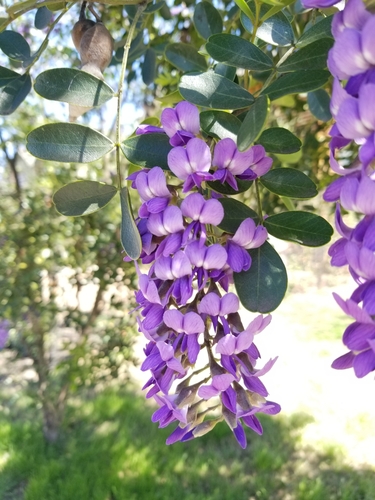
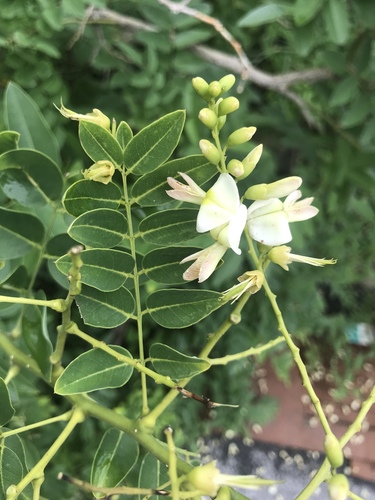
Styphnolobium japonicum (L.) Schott, commonly called the Japanese pagoda tree, Chinese scholar tree, or pagoda tree (with the synonym Sophora japonica), is a species of deciduous tree in the subfamily Faboideae of the pea family Fabaceae. It was previously classified as part of a broader definition of the genus Sophora. Species in the genus Styphnolobium differ from Sophora because they cannot form root symbioses with rhizobia, which are nitrogen-fixing bacteria. It also differs from the related genus Calia (mescalbeans) by having deciduous leaves and flowers that grow in axillary rather than terminal racemes. Its leaves are alternate and pinnate, with between 9 and 21 leaflets, and its flowers grow in pendulous racemes that resemble those of the black locust. Styphnolobium japonicum is native to China. Despite its scientific name referencing Japan, the species was introduced to Japan and did not originally occur there. It is a widely popular ornamental tree in Europe, North America, and South Africa, grown for its white flowers that bloom in late summer, after most other flowering trees have finished flowering for the season. It reaches a mature height of 10 to 20 meters with a matching spread, and produces fine, dark brown timber. Known as huái in Chinese, this species (formerly called Sophora japonica) is counted among the 50 fundamental herbs used in traditional Chinese medicine. Its fruits have been documented to have stress resistance and antioxidant properties. The wood is used to craft the strong, springy curved "enju wood" handle for the traditional Japanese woodworking adze called the chouna. Pagoda tree wood becomes very hard after drying, which gives products made from it long durability. Pagoda tree trunks typically have alternating ridges of light-brown outer layers and gray-brown inner layers, making wood carvings created from this wood very decorative. This includes carvings made by the Ainu people indigenous to Hokkaido, who are famously known for their carvings of Blakiston's fish owl.