About Strombocactus disciformis (DC.) Britton & Rose
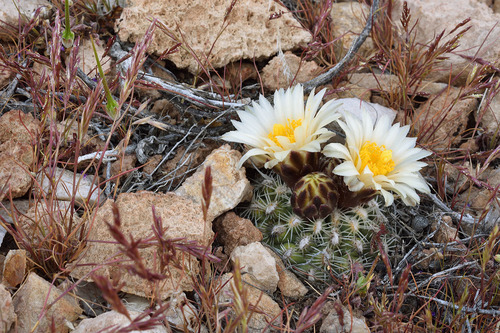
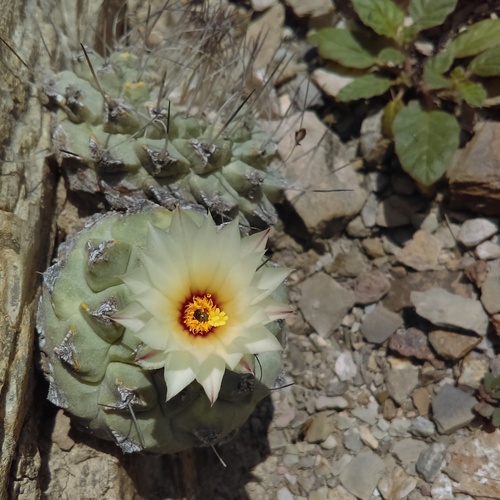
Strombocactus is a monotypic genus, meaning it contains only one recognized species: Strombocactus disciformis (DC.) Britton & Rose. This species produces a strong, turnip-like taproot, and is a low-growing, gray-green succulent with an unbranched stem. In its natural habitat, it grows in a disk shape, half-buried in the ground, reaching approximately 8 cm in diameter and 2 to 3 cm in height. In cultivation, the stem becomes nearly spherical. The mature underground root tuber can grow up to 15 cm in diameter, which is larger than the plant's above-ground parts. The above-ground stem is small, depressed, and roughly spherical, covered in spirally arranged overlapping tubercles. The plant's spiral ribs are deeply notched, creating a wart-like appearance where the spiral ratio is close to the golden ratio of 13:8. Each wart bears a spine-bearing areole at its blunt tip. These warts have a square base and are curved in wild plants, but straighter when grown in cultivation. Individual plants rarely have more than four to five short, bristly spines, which fall off after a few years. Flowers grow from new crown growth, emerging from the youngest areoles. The flowers are white, cream, or magenta, 2.5 to 3.5 cm long, and open to around 4 cm in diameter. The thin-walled brown fruits are 7 mm long, and contain 0.3 mm reddish-brown seeds. This species is distributed in the Mexican states of Querétaro, Hidalgo, and Guanajuato, where it grows on almost vertical, weathered limestone rocks at altitudes between 1000 and 1600 meters.