About Streptanthus anomalus D.L.Smith, A.Arthur & R.E.Preston
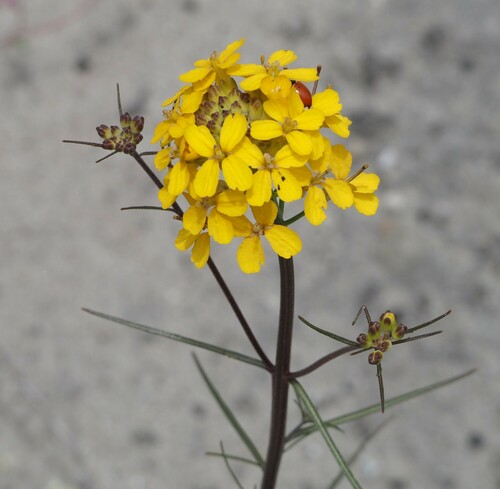
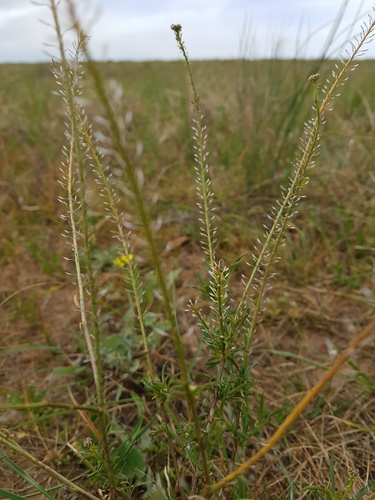
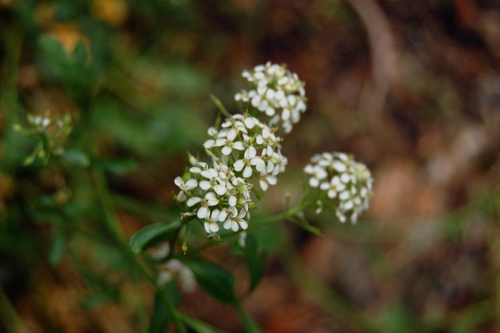
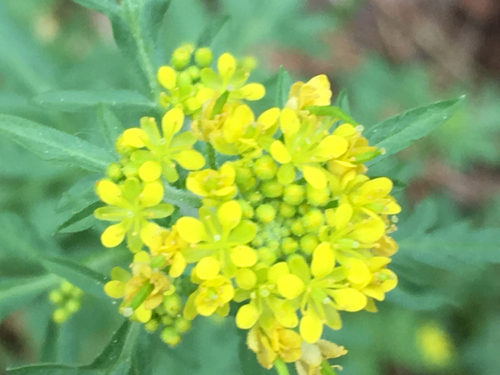
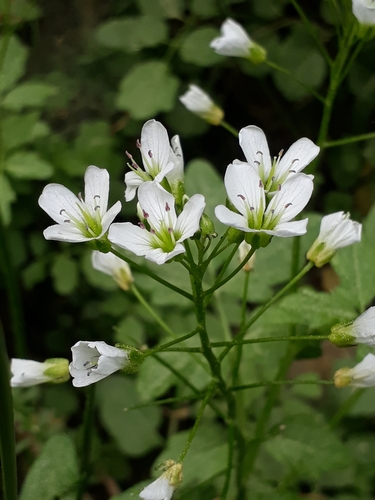
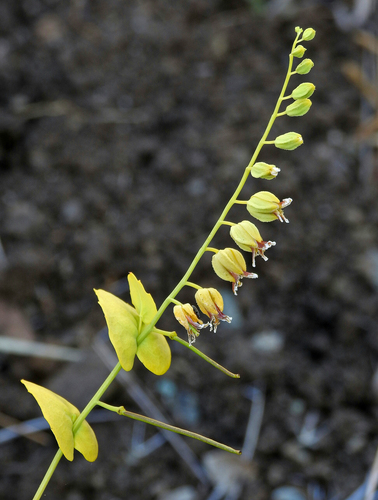
Streptanthus anomalus (scientific name: Streptanthus anomalus D.L.Smith, A.Arthur & R.E.Preston) is an annual plant. It produces a simple or branched erect stem that grows 15 to 40 cm (6 to 16 inches) tall. Its basal rosette leaves are 3 to 5 cm (1.2 to 2.0 inches) long, oblanceolate in shape, toothed, and have ciliate margins. Its cauline leaves are ovate, with distinctive clasping bases. By the time flowering begins, most rosette leaves and proximal stem leaves have fallen away, and the remaining distal leaves have faded to a greenish yellow. Flowers grow in bracted, one-sided racemes, attached to 2–3 mm (0.08–0.12 inch) long pedicels. The calyx is urn-shaped, and the sepals are either greenish-yellow or dark wine-red. The petals are 7–9 mm (0.28–0.35 inches) long, extending out from the calyx, with yellow bases, brown to purple blades, and white margins. Stamens are arranged either as 3 unequal pairs, or as 4 long stamens and 2 short stamens. The upper stamens have fused filaments and sterile anthers. The fruits are siliques, measuring 4–7 cm (1 9⁄16–2 3⁄4 inches) long and 3–4 mm (0.12–0.16 inches) wide, and each holds 30 to 40 seeds. Each individual seed is 2 mm (0.08 inches) long and 1.75 mm (0.07 inches) wide, with a narrow wing. This species is restricted to just 3 occurrences on the lower slopes of Mount Burdell, north of the City of Novato in Marin County, California. The three occurrences were discovered in 2011, 2012, and 2023, respectively. Streptanthus anomalus is endemic to serpentine soils, where it grows in sparsely vegetated grasslands with thin, rocky soils.