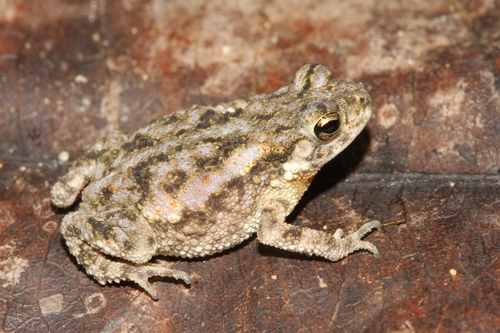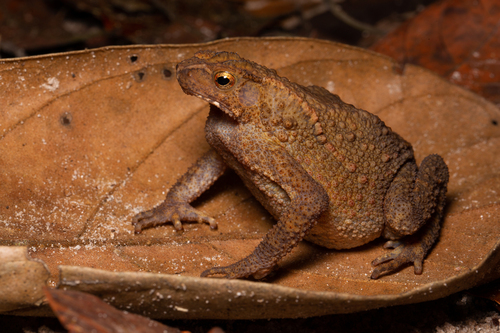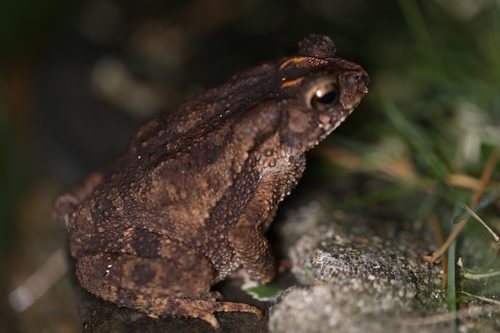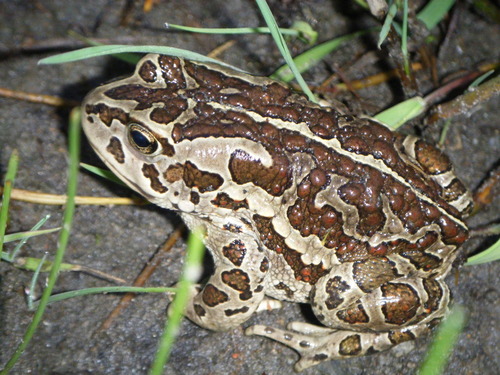
About Strauchbufo raddei (Strauch, 1876)
Common Name and Size
Strauchbufo raddei, commonly known as the Mongolian toad, is a relatively small toad species, with adult snout-to-vent length never exceeding 9 cm (3.5 in).
Geographical Distribution
This species is distributed across most of northern China, Mongolia, the Russian Far East, and also occurs in North Korea. It is especially common in the Amur River basin shared by China and Russia.
Habitat Preferences
S. raddei can live in a wide variety of habitats, and is often found in dry regions, where it prefers sandy soil.
Type Locality
This species was first described from specimens collected in the Alashan desert.
Elevation and Range Limits
It does not live at elevations above 2,700 m (8,900 ft) or below 600 m (2,000 ft), and its northernmost known population is located on Olkhon Island in Russia's Lake Baikal.
Salt Tolerance
The Mongolian toad is one of the few amphibian species that can enter salt water.
Mating Season
The mating season of S. raddei runs from March to July, varying with local climate.
Reproduction and Tadpole Survival
Females usually lay eggs in shallow puddles, and many tadpoles die when these temporary puddles dry up.
Hibernation Behavior
Mongolian toads hibernate underground in groups, in burrows that can be up to 2 m (6.6 ft) deep.