About Stigmatura budytoides (Orbigny & Lafresnaye, 1837)
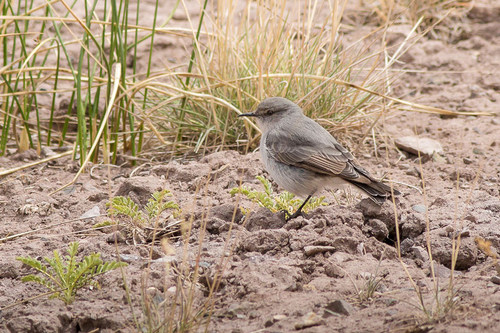
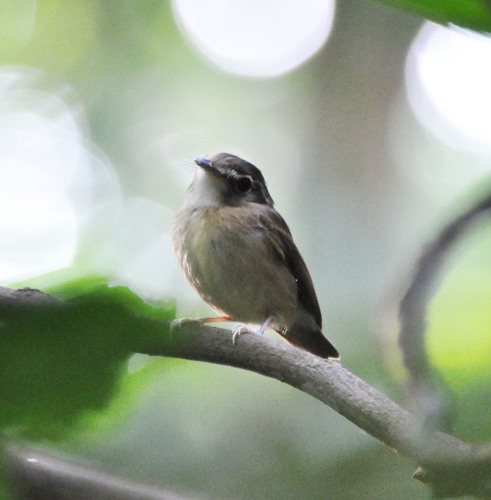
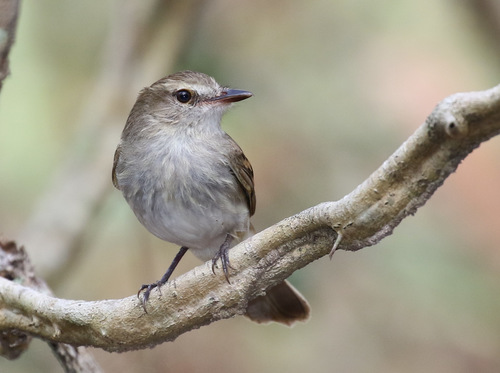
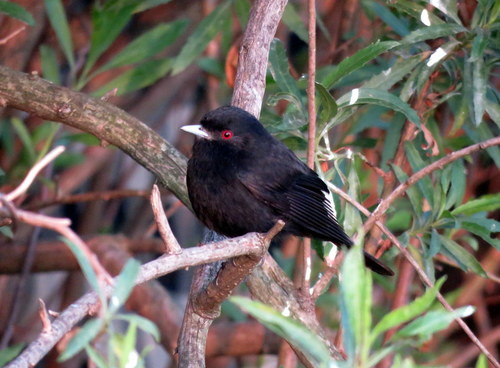
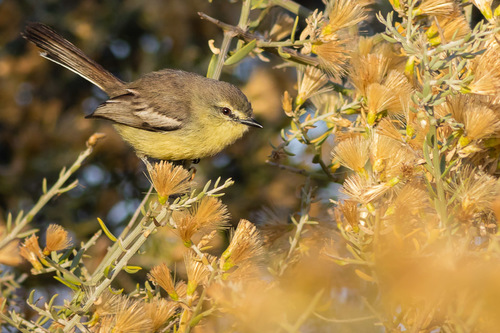
Stigmatura budytoides, commonly known as the greater wagtail-tyrant, was first described by Orbigny & Lafresnaye in 1837. The species measures 14 to 16 cm (5.5 to 6.3 in) in length and weighs 8.5 to 13.2 g (0.30 to 0.47 oz). Both sexes share the same plumage pattern, though males are slightly larger than females. Among its four accepted subspecies, the nominate S. b. budytoides is the largest, and S. b. gracilis is the smallest. Adults of the nominate subspecies have a bright yellow supercilium that extends from the bill to past the eye, a blackish line running through the eye, and dusky ear coverts on an otherwise yellowish face. Their crown and upperparts are grayish olive. Their wings are dusky, with wide white edges on the innermost flight feathers and the coverts; the white edges on the coverts form a large white patch on the closed wing. Their tail is long and mostly dusky; the outer three or four pairs of tail feathers have large white oval markings at their tips, while the outermost feathers have a wide white band at their base and white outer webs. Their throat and underparts are bright yellow, with a faint buffy tinge on the breast. Subspecies S. b. inzonata has paler yellow underparts than the nominate subspecies, with almost no buffy wash on the breast. The white band on its outer tail feathers is variable in size, but it is always smaller than that of the nominate. Subspecies S. b. flavocinerea has paler underparts than S. b. inzonata. Its upperparts are grayer and less olive than those of the nominate, it has a more whitish supercilium, grayer edges on the wing feathers, smaller white tail spots, and no white base on the tail feathers. Subspecies S. b. gracilis has plumage identical to that of the nominate subspecies, but is distinctly smaller in body size. For all subspecies and both sexes, the iris is dark brown, the bill is long and black, and the legs and feet are black. The greater wagtail-tyrant has a disjunct distribution, with each subspecies occupying a separate range. S. b. budytoides is found in Bolivia, in the departments of eastern Cochabamba, western Santa Cruz, and northern Chuquisaca. S. b. inzonata ranges from southern Santa Cruz Department in Bolivia east and south into western Paraguay and northwestern Argentina, reaching as far south as the Argentine provinces of Córdoba and San Luis. S. b. flavocinerea occurs in central Argentina from the provinces of Mendoza, Córdoba, and western Buenos Aires south to northern Río Negro Province. S. b. gracilis is found in the eastern Brazilian states of Piauí, Ceará, Pernambuco, Bahia, and Minas Gerais. The first three subspecies live in the Gran Chaco biome, which consists of arid scrublands, dry deciduous woodlands, and gallery forest within savanna. Subspecies S. b. gracilis inhabits similar landscapes that are somewhat moister than the Gran Chaco. Across most of its range, the species occurs between sea level and 1,000 m (3,300 ft) in elevation, but it can reach up to 2,700 m (8,900 ft) in Bolivia.