About Sternbergia lutea (L.) Ker Gawl. ex Spreng.
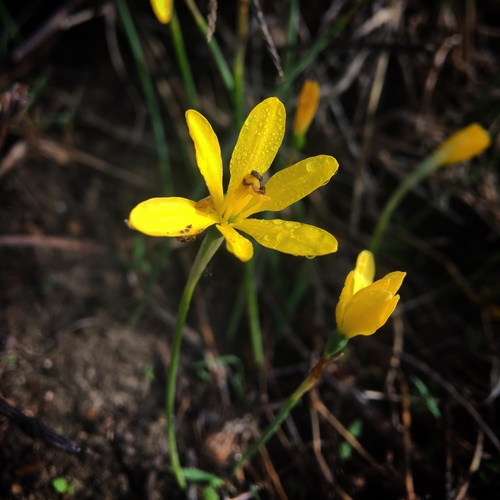
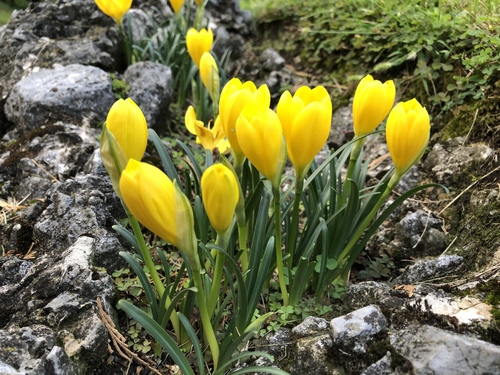
Sternbergia lutea (L.) Ker Gawl. ex Spreng. has a broad natural distribution, ranging from the Balearic Islands in the Western Mediterranean all the way to Tajikistan in Central Asia. During the summer months, the plant dies back completely and survives as an underground bulb. Its leaves first emerge in autumn, between September and November in its native habitats. These leaves are glossy green, can grow up to 12 mm wide, and stay active throughout the winter. Deep yellow flowers emerge shortly after the leaves appear. Each flower has six tepals that measure around 3–3.5 cm long, six yellow stamens, and a single style ending in one stigma. Smaller forms of this species with narrower leaves (up to just 5 mm wide) and narrower tepals (3–12 mm wide, compared to 10–20 mm wide in typical forms) have been separated into different taxa under various names, such as S. lutea var. graeca and S. sicula. In cultivation, Sternbergia lutea is hardy to USDA hardiness zones 7–9, which corresponds to temperatures between −18 °C and −1 °C, with hardiness varying based on the level of winter protection provided. It can be grown outdoors in the British Isles, as long as it is planted in well-drained soil. To produce good blooms, the plant requires a warm, dry period during the summer, and alkaline soils are recommended for growing it. Bulbs are typically planted when the plant is dormant, in late summer or early autumn. However, bulbs can also be lifted and divided before the leaves die back in late spring. This species has been awarded the Royal Horticultural Society's Award of Garden Merit. A vigorous, narrow-leaved form is grown in gardens under the name S. lutea var. angustifolia.