About Stephanolepis cirrhifer (Temminck & Schlegel, 1850)
Common Name and Size
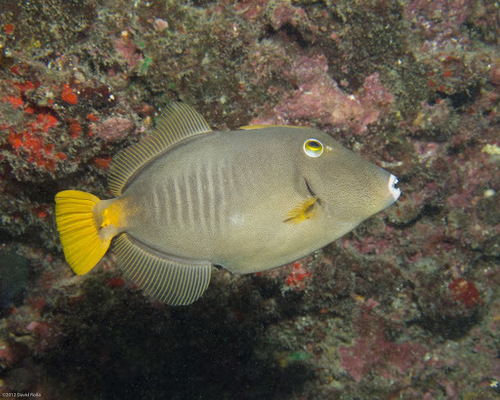
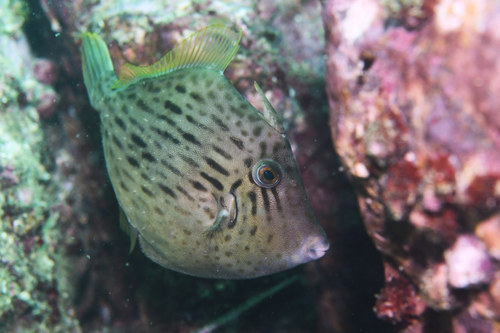
Stephanolepis cirrhifer, commonly called the thread-sail filefish, reaches a maximum adult length of about 30 centimetres (12 inches).
Dorsal and Anal Fin Structure
Its first dorsal fin is a strong, retractable spine that can fold backwards, while the second dorsal fin and anal fin are soft.
Pectoral and Tail Fin Structure
The species has comparatively small pectoral fins and truncated, fan-shaped tail fins.
Source Description Inconsistency
There is a minor inconsistency in the source description that notes the dorsal and anal fins are colorless, also says the second dorsal, anal, and caudal fins are rounded.
Male Fin Filaments
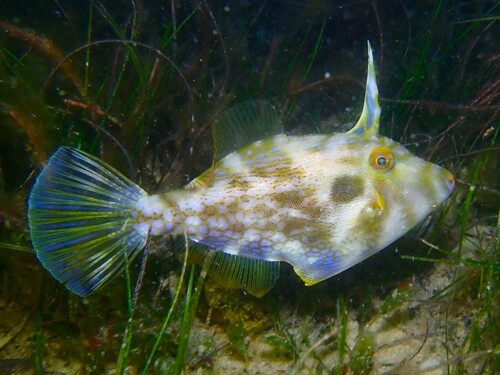
In males, 1 to 3 soft dorsal fin rays extend as filaments, with the first ray forming a particularly long thread.
Abdominal Spike
Thread-sail filefish also have a small abdominal spike.
Coloration and Patterning
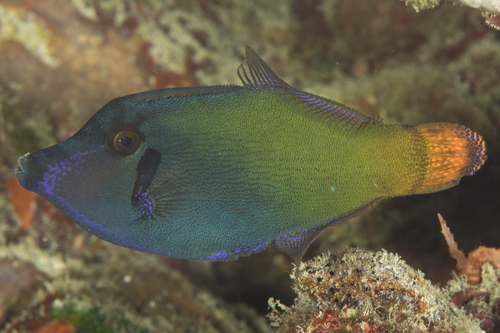
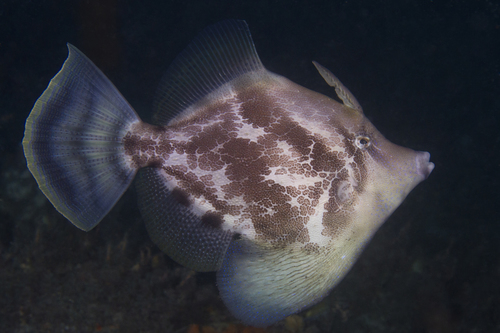
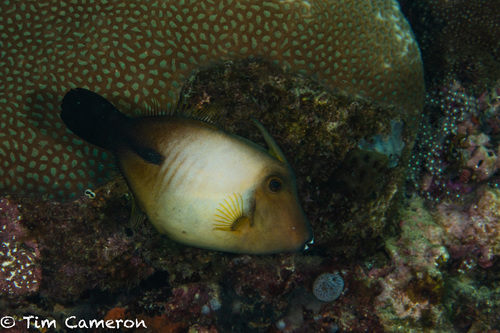
Their base coloration ranges from light brown to grayish to light greenish-beige, with subtle patterning made up of irregular, broken stripes in shades from medium brown to blackish.
Juvenile Shelter
Juvenile thread-sail filefish typically shelter from predators within clusters of drifting seaweed.
Adult Habitat and Social Behavior
Adults usually live near the seabed at depths around 10 metres (33 feet), and are mostly solitary, residing among coral and seaweed.
Migration Pattern
This species is oceanodromous, meaning it migrates entirely within ocean waters between its feeding and spawning grounds, which can be over 100 kilometres (62 miles) apart.
Spawning Season
Its spawning season runs from May to August.
Juvenile Habitat and Diet
Juveniles under 5 centimetres (2.0 inches) live in shallow water, where they feed on small crustaceans, mollusks, and algae.
Trophic Level
The thread-sail filefish is an omnivore that eats both plant and animal matter.
Primary Diet Components
Its diet includes kelp, and consists mainly of amphipods such as gammarids and skeleton shrimp, as well as the seagrass Zostera marina.
Smaller Prey Items
It also feeds on smaller organisms including bryozoans and some species of serpulid tube worms.
Additional Recorded Prey
Additional recorded prey items include fish, isopods, cirripeds, polychaetes, pelecypods, seaweeds of the genus Sargassum, and gelatinous plankton such as the moon jellyfish Aurelia sp. and the giant jellyfish Nemopilema nomurai.
Parasite Host
S. cirrhifer acts as a host for the pennellid copepod parasite Peniculus minuticaudae, which most often infects the fins of female fish.
Commercial Use
The thread-sail filefish is cultured and sold commercially as food in Asian countries including Korea and Japan.
Culinary Use in Korea
In Korea, it is an ingredient in jwipo.
Hatchery Breeding Rationale
Demand for the fish is very high in Korea, so fisheries often use fish hatcheries to breed additional fish to supplement wild stock.
Wild and Hatchery Genetic Differentiation
This hatchery breeding has led to genetic differentiation between wild-born and hatchery-born S. cirrhifer; as many as 95 alleles have been found to be unique to one population, from minor genetic variations that occur exclusively in either population.