About Stenamma debile (Foerster, 1850)
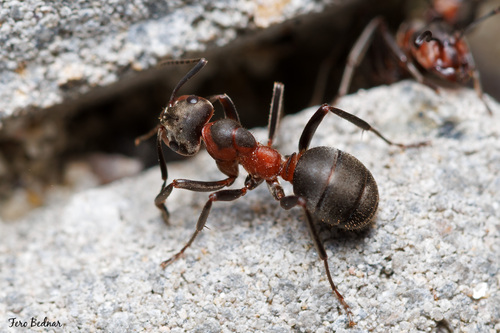
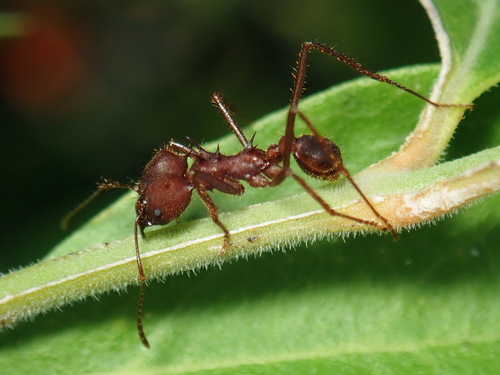
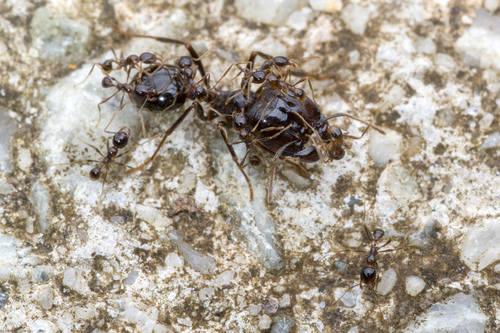
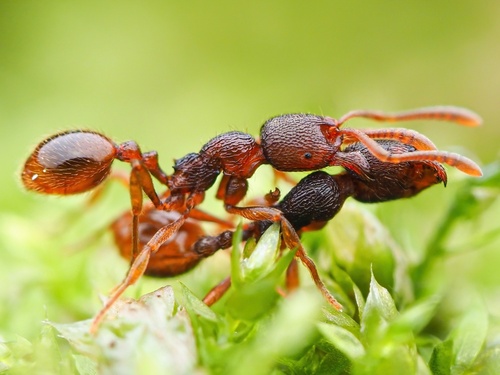
Stenamma debile (Foerster, 1850) is extremely similar to Stenamma westwoodii, and microscopic inspection is required to tell the two species apart. Their close similarity led to the belief that only S. westwoodii, a member of the Stenamma genus, existed in the British Isles until the 1990s. It was not until Dubois published research in 1993 that S. debile was recognized as a separate species. S. debile is the much more common of the two species, and far more likely to be encountered. The original holotype of this species was a male specimen, and this holotype has been confirmed to be completely destroyed. Overall, S. debile is reddish-brown, and has a long, thin petiole that can be used to identify the species. This ant is native to Europe. Most of its population is concentrated in southern England, northern France, and lowland countries, with a second population concentration in and around Switzerland. It has a sparse distribution across eastern Europe, but holds a larger population in the far south of the Scandinavian Peninsula. Colonies of S. debile are most often found in deciduous woodland with an undisturbed leaf litter layer. This species shows no preference for any particular soil type, and its nests are commonly located under stones or leaf litter. Because of the close similarity between S. debile and S. westwoodii, the two species are often easily confused, though S. debile is far more common and more likely to be encountered.