About Steatoda triangulosa (Walckenaer, 1802)
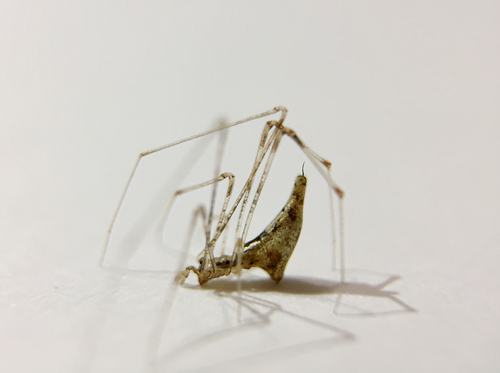
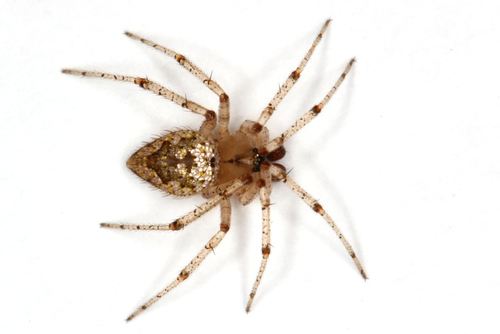
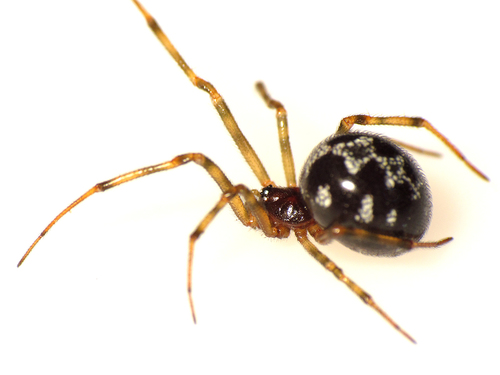
The adult female triangulate cobweb spider (Steatoda triangulosa) is 3 to 6 mm (1/8 to 1/4 inch) long. It has a brownish-orange cephalothorax, spindly yellowish legs covered in tiny hairs, and a round, bulbous creamy-colored abdomen. The abdomen features distinctive parallel purply-brown zigzag lines that run from front to back, which separates this species from other theridiids in its range. This spider preys on a wide variety of arthropods, including ants (such as fire ants), other spiders, pillbugs, and ticks. It also preys on several spider species considered harmful to humans, including the brown recluse. It preys on any organism it catches in its web. Among Steatoda species, it is the most voracious and prey-driven, despite being one of the smaller species in the genus. The spider's egg sac is made from loosely woven silk and is roughly the same size as the adult spider itself. Each egg sac contains approximately 30 eggs. Reproduction via parthenogenesis has been speculated but not proven. Triangulate cobweb spiders typically live near windows or in dark areas. They spend a portion of each day eating and many hours developing their webs; a well-woven web does not break easily. Many dead insects, ranging from stinkbugs, other spiders including Lycosidae, large Scutigera, and even wasps, can accumulate below or inside the web. Like other members of the family Theridiidae, S. triangulosa builds a cobweb, which is an irregular tangle of sticky silken fibers. It constructs three-dimensional webs in dark places, usually close to the substrate, and is frequently found under stones. Like other web-building spiders, this species has very poor eyesight, and depends mostly on vibrations transmitted through its web to orient toward prey and detect larger animals that could harm or kill it. The species is not very defensive toward humans, and only one case of human envenomation is known. S. triangulosa is a cosmopolitan species. It is native to Eurasia, and has been introduced to many other regions including North America, Argentina, the Canary Islands, and South Africa. It is primarily a house spider, and builds webs in dark corners of buildings and other human-made structures.