About Steatoda paykulliana (Walckenaer, 1806)
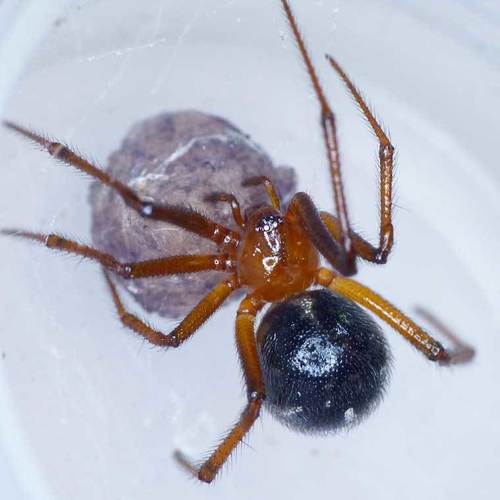
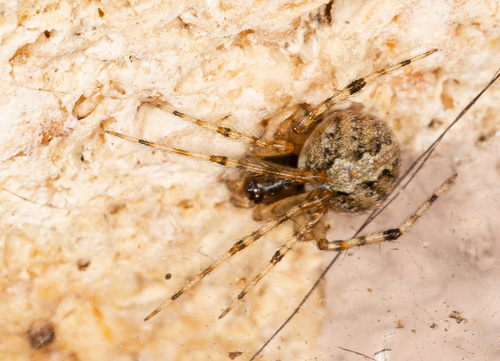
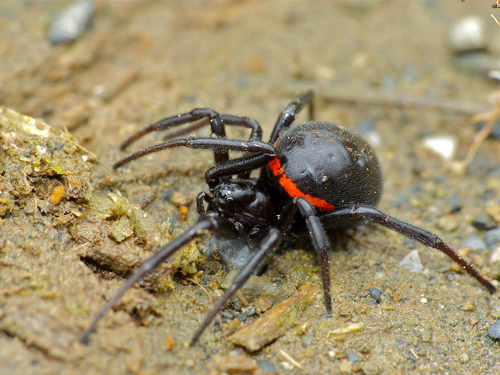
Steatoda paykulliana is a species of spider commonly known as a false widow, a name given to Steatoda species because they resemble true black widow spiders in body shape and color markings. The body length of female S. paykulliana ranges from 8 mm to 12 mm when pregnant. Females have a globular, shiny black abdomen that bears two non-overlapping stripes: one dorsal stripe and one lateral stripe. This pattern differentiates S. paykulliana from true black widow spiders, which have both dorsal and ventral markings. The stripes are ivory-yellow on young female S. paykulliana, and turn orange-red on mature females. Males are only about half the size of females, and have less prominent markings. The venom of S. paykulliana is much less potent than the venom of true black widows, and effects on humans are minor, similar to the sting of a wasp. S. paykulliana is widespread across Europe, Asia, and the Middle East. Confirmed reports of this species come from Portugal, Spain, France including Corsica, Belgium, Italy, Switzerland, Austria, Slovenia, Croatia, Serbia, Bosnia and Herzegovina, North Macedonia, Albania, Romania, Ukraine, Bulgaria, Greece, Malta, the Netherlands, Great Britain, Cyprus, Turkey, Georgia, Lebanon, Syria, Israel, Palestine, Azerbaijan, Dagestan, Russia, Northwest China, Kazakhstan, Southern Kyrgyzstan, Tajikistan, Uzbekistan, Turkmenistan, Iran, Saudi Arabia, Yemen, Egypt, Ethiopia, Eritrea, Libya, Tunisia, Algeria, and Morocco.