About Steatoda bipunctata (Linnaeus, 1758)
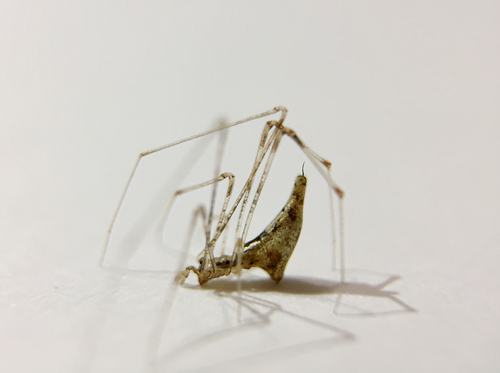
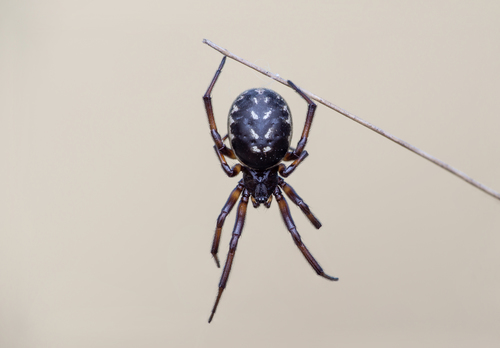
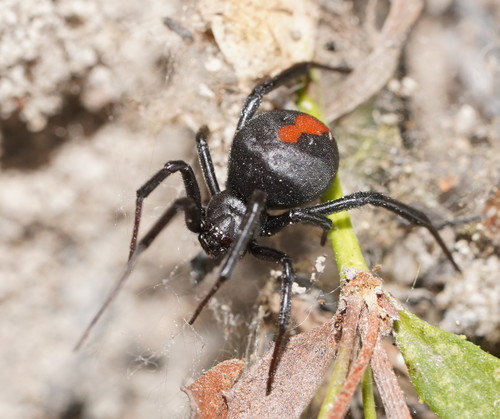
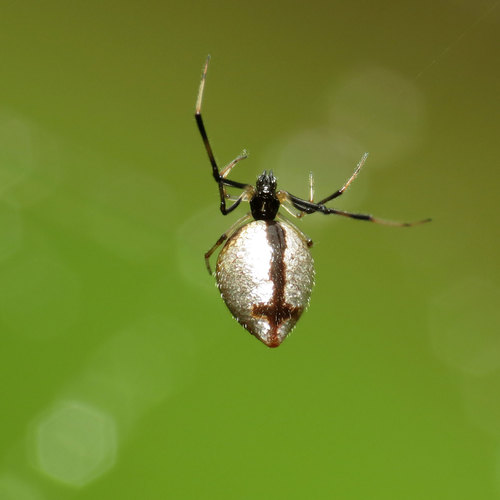
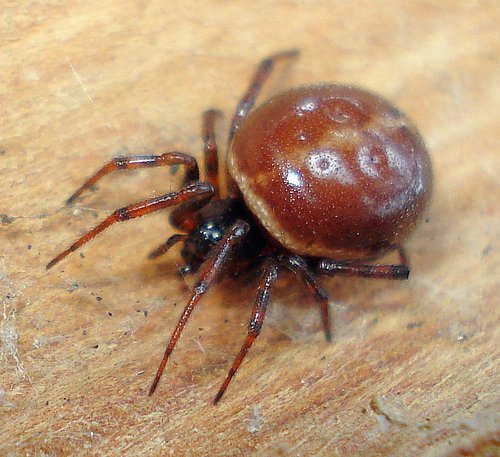
Steatoda bipunctata is a species of cob-web spider belonging to the genus Steatoda in the family Theridiidae. It has a holarctic distribution and is common across North America and Europe. It is often found near human-built structures, including basements and sheds. Its common nickname is the rabbit hutch spider, because rabbit hutches frequently provide a suitable habitat for this species. This spider shares a similar body shape with black widow spiders of the genus Latrodectus, so it is often mistaken for black widows, though its bite is far less dangerous to humans. All species in the genus Steatoda are commonly referred to as 'false widows' for this reason. Both sexes have bulbous, brownish abdomens, which typically have a broken pale stripe running down the center and an additional pale stripe across the front section of the abdomen. The apodemes, the sites where muscles attach, on the dorsal side of the abdomen appear as pairs of dark dimples; these markings are likely what give the spider its Latin name, from bi- meaning 'two' and -punctata meaning 'spots'. On the underside of the abdomen, Steatoda bipunctata has a distinct pattern that resembles an infinity sign. Female abdomens are light brown and typically shinier than those of males. This species rarely grows longer than 7 mm in body length. There are no confirmed recorded cases of human envenomation from this spider, and it is very unlikely that the fangs of this small species can penetrate human skin.