About Stachys arvensis (L.) L.
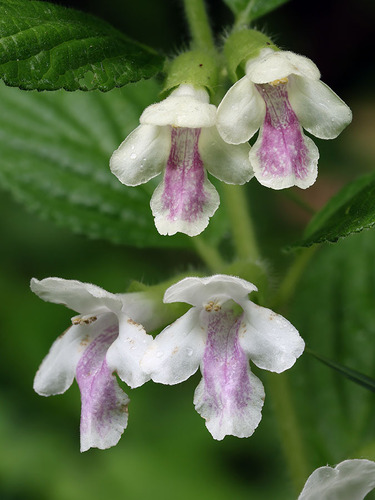
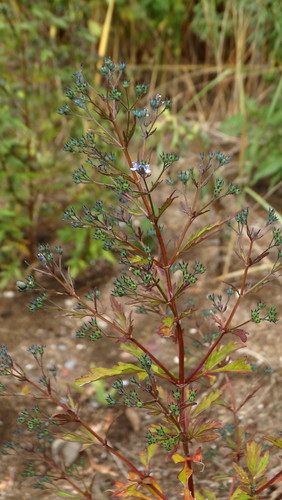
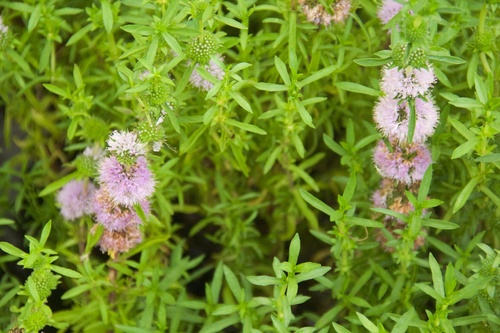
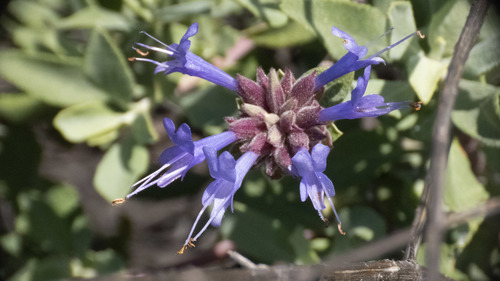
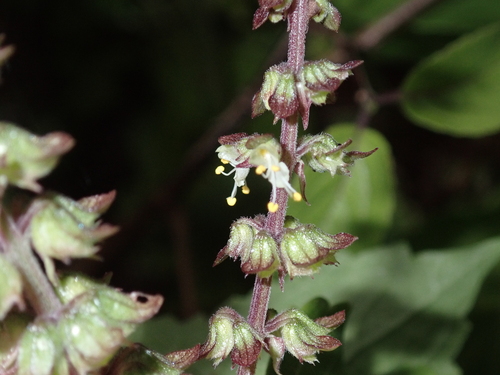
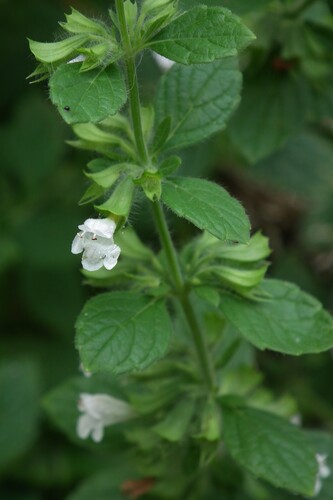
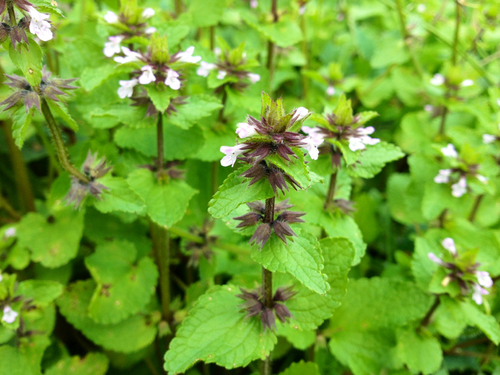
Field woundwort, scientifically named Stachys arvensis (L.) L., is an annual herb. It has branched square stems that reach up to 45 cm in length, and grows in either a sprawling or erect habit. The stems are pale green, covered with spreading, sparsely glandular hairs that grow up to 2 mm long. Plants are easy to uproot, which reveals a mass of short, white, fibrous roots at the plant's base; these roots sometimes also grow along any horizontal stems near the base. The leaves are arranged in opposite decussate pairs, have no stipules, and have petioles up to 4 cm long. The leaf blade is simple, oval, and up to 4 cm long, with a truncate base and between 7 and 12 rounded teeth along each margin. The upper leaf surface is a dull medium green, while the lower surface is paler; leaves are hairy on both sides. The inflorescence is a terminal spike holding up to 8 false whorls of 4 to 7 flowers each. A false whorl is actually two opposite clusters that appear to form a single whorl. Each flower has a short pedicel up to 1.5 mm long. Each whorl is subtended by a pair of leaf-like bracts; these bracts are stalked at the base of the inflorescence, and become sessile toward the top of the plant. There is also one tiny bracteole at the base of each flower cluster. Lower whorls are widely spaced, while upper whorls are more crowded toward the tip of the plant. The flowers are zygomorphic, with a 5-lobed calyx tube 5 to 7 mm long, and a two-lipped corolla 6 to 8 mm long. The upper lip of the corolla is entire, and the lower lip is three-lobed, with the central lobe being much larger. The corolla can be white, pink, or purple. Field woundwort grows in many types of habitat, including disturbed areas, and it often grows in moist spots. As its common name 'field woundwort' suggests, this herb has been used to heal wounds since Roman times. Its seeds, scattered by Roman soldiers, mark the lines of Roman roads. Its close relatives, hedge woundwort and marsh woundwort, are also used to treat wounds.