About Sporobolus indicus (L.) R.Br.
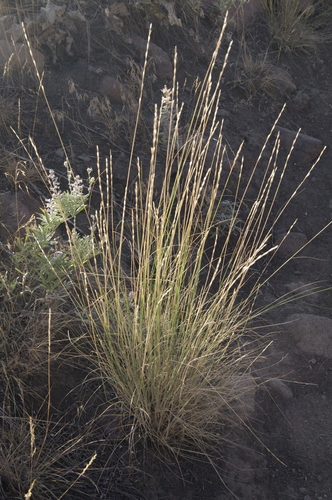
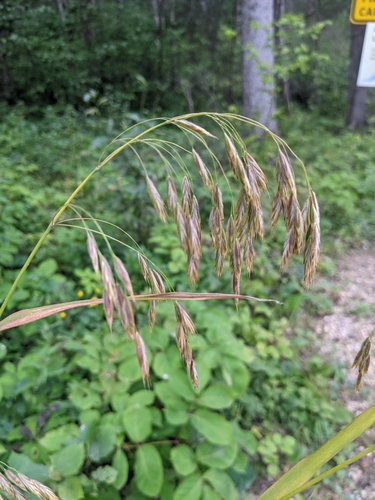
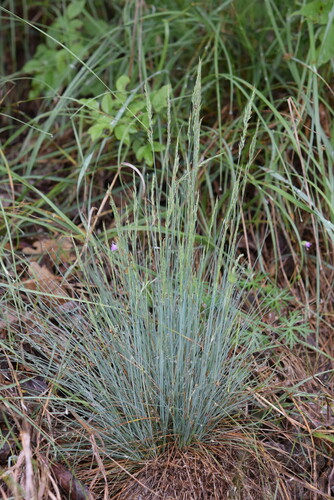
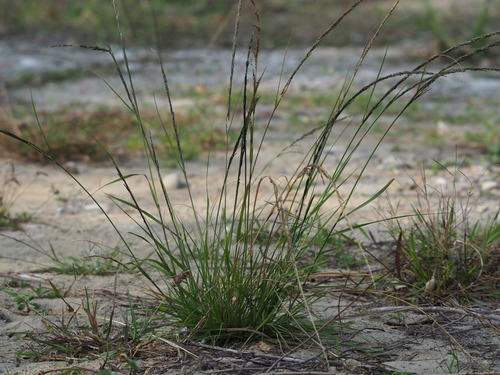
Sporobolus indicus (L.) R.Br. is a perennial bunchgrass that grows a tuft of stems reaching approximately 1 meter (3 feet) in height. Its hairless leaves grow up to 50 centimeters long. The inflorescence is a dense, narrow, spikelike panicle that holds grayish or light brown spikelets, and the base of this structure is sometimes sheathed by the upper leaf. The inflorescence and upper leaves are sometimes coated in a black smut fungus from the genus Bipolaris, which is the origin of its common name smut grass. The 1889 publication The Useful Native Plants of Australia records that additional common names for this species include "Rat-tail Grass" and "Chilian Grass", and that Indigenous people in the Cloncurry River area of Northern Australia referred to it as "Jil-crow-a-berry". This source also states that Sporobolus indicus is a fine, open pasture grass found across Australian colonies. Its numerous deep-penetrating roots allow it to survive severe drought. It produces a fair amount of fodder that is enjoyed by livestock, but it is too coarse for sheep. Its seeds are the main food source for many small birds, and it has been proposed as a material for making paper. This bunchgrass is native to temperate and tropical regions of the Americas. It is now present in many other areas and across many Pacific Islands as an introduced species and a common weed of disturbed habitats. It is naturalized in Hawaii, Fiji, French Polynesia, New Caledonia, Midway Atoll, and other locations.