About Sporobolus foliosus (Trin.) P.M.Peterson & Saarela
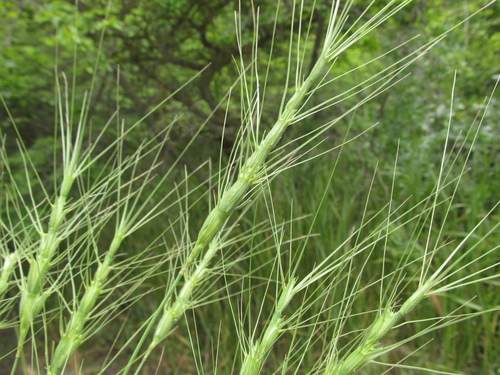
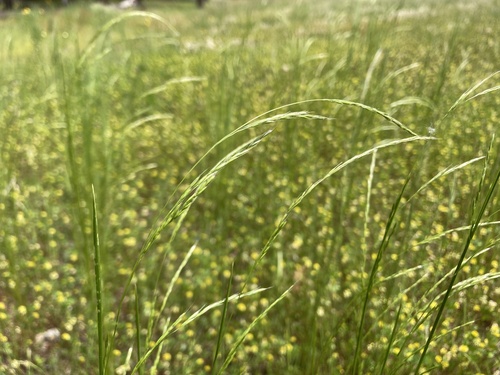
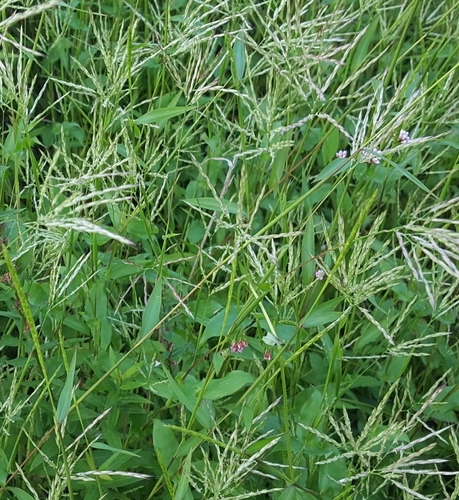
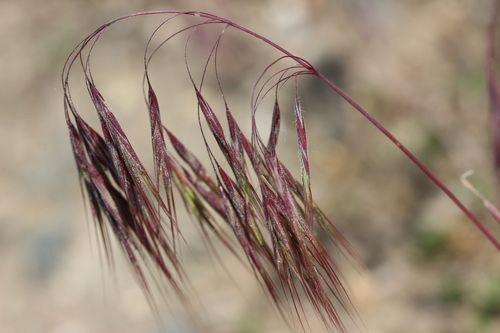
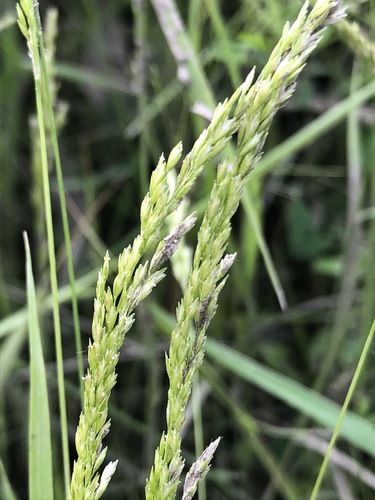
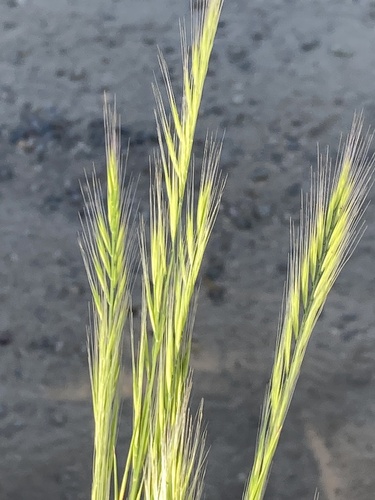
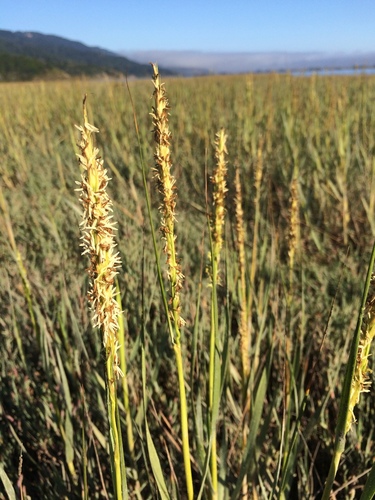
Sporobolus foliosus is a grass species commonly called California cordgrass. It was originally classified under Spartina foliosa, and was reclassified to its current scientific name after a 2014 taxonomic revision. This species is native to salt marshes and mudflats along the coasts of California and Baja California, and is particularly found in San Francisco Bay. It is a perennial grass that grows from short rhizomes. It can produce either single stems or clumps of thick, fleshy stems that reach a maximum height of 1.5 meters. Stems are green or have purple tints. Its long, narrow leaves are either flat or rolled inward. Its inflorescence is a narrow, dense, spike-shaped cluster of tightly appressed branches, that can grow up to 25 centimeters long. Lower spikelets are sometimes enclosed within the basal sheaths of upper leaves. This native species is seriously threatened by the invasion of smooth cordgrass, Sporobolus alterniflorus, a relative native to the North American Atlantic coast that is non-native to the Pacific coast. S. alterniflorus was introduced to San Francisco Bay in the 1970s, and quickly began hybridizing with S. foliosus. Hybrids generally outcompete the native S. foliosus and spread rapidly, putting the native species at risk of localized extirpation. The two species flower and reproduce at the same time of year. The invasive species produces large amounts of pollen that fertilize the flowers of the native plant, so the majority of offspring from an affected native plant are hybrids. This process is an example of genetic pollution. The S. alterniflorus × foliosus hybrids have spread rapidly because they have higher genetic fitness than either of the two parent species, which is an example of hybrid vigor. Even with this threat, S. foliosus remains the dominant plant at lower tidal elevations in most salt marshes around San Francisco Bay. Many locations within the Bay have stayed uninfested during ongoing efforts to eradicate S. alterniflorus and their hybrids. Tidal marsh habitat restoration is currently underway at multiple sites, including planting of cultivated S. foliosus. This cultivated stock is harvested from uninfested locations and propagated in nurseries.