About Spodoptera mauritia (Boisduval, 1833)
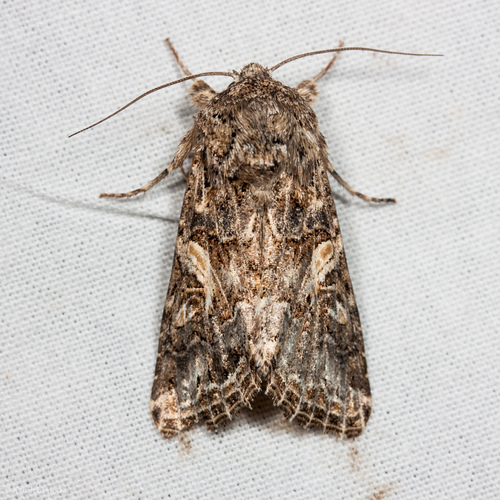
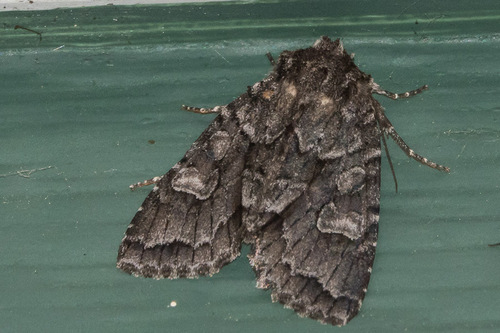
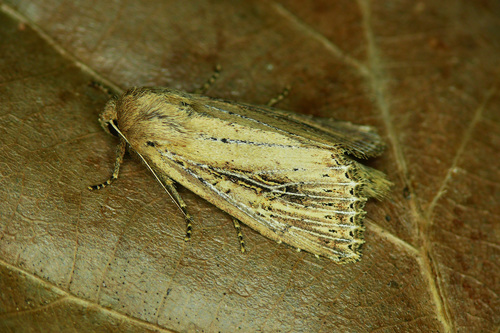
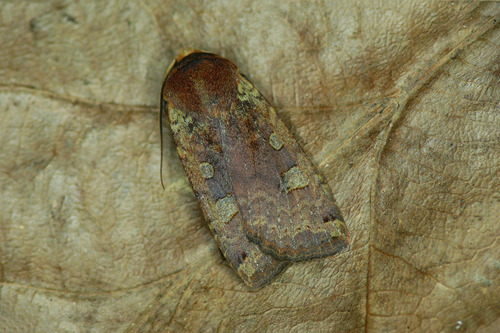
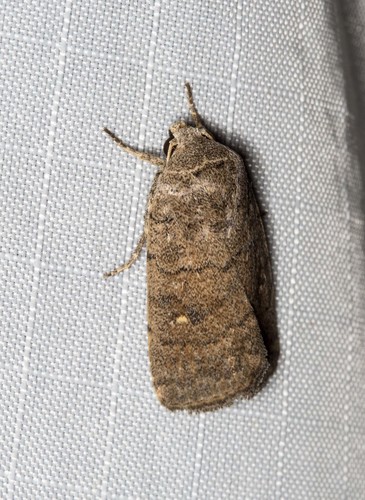
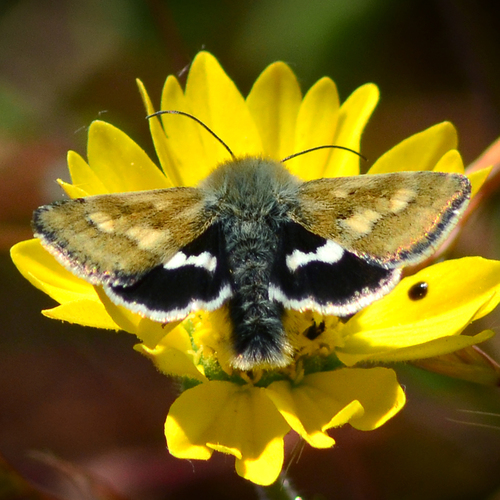
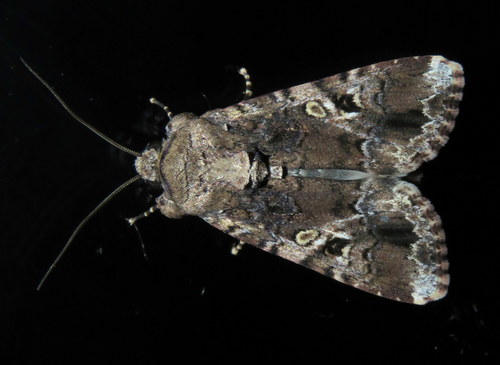
The wingspan of Spodoptera mauritia is approximately 40 mm. Its body is dark grey brown with a rusty tinge, and the abdomen is fuscous. The forewings have indistinct double waved sub-basal, antemedial, and postmedial lines. The orbicular spot is small and ochreous, while the reniform spot is blackish. The submarginal line is whitish and irregularly waved. A white patch is often visible between the orbicular and reniform spots, and a dark patch occurs on the central marginal area. The hindwings are opalescent and semi-hyaline white, with a dark marginal line.
This species is widespread across a range that extends from the Red Sea through India, Myanmar, and Sri Lanka to Malaya and Australia, and it occurs widely across Pacific Islands including the Solomons, New Hebrides, Fiji, Samoa, Hawaii, the Society Islands, Austral Islands, Marquesas, and the Marshall Islands.
The larvae of Spodoptera mauritia feed on a variety of plants, including multiple grasses such as rice, wheat, Cynodon, Pennisetum clandestinum, Sorghum bicolor, and Oryza sativa, as well as the tree Casuarina equisetifolia. This species is considered one of the major international agricultural pests affecting crops and pastures. Unlike many other insects, sixth instar armyworm caterpillars of this species excrete urea rather than uric acid as their nitrogenous waste. Spodoptera mauritia has been recorded occurring in the feces of the Greater tube-nosed bat.