About Spirostachys africana Sond.
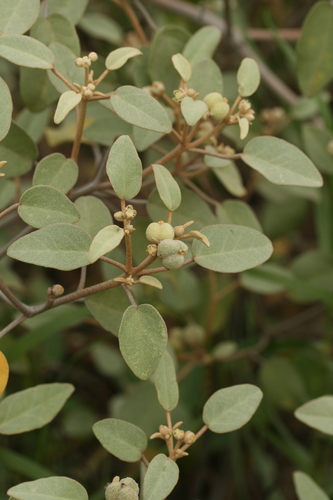
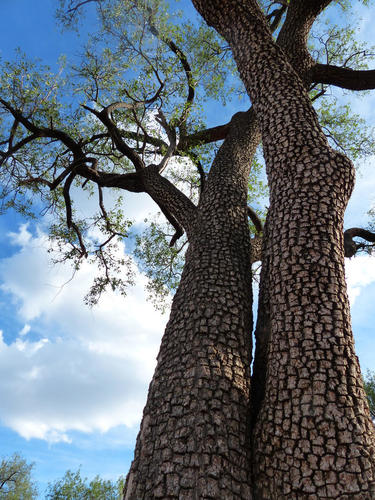
This species has small, elliptic leaves with crenate margins that turn bright red in winter before dropping. The leaf petiole has two small glands at its distal end. The tree’s grey-black rough bark is characteristically split into distinct neat rectangles. Its catkin-like flowers emerge in early spring before new leaves grow, and male and female flowers grow separately on the same individual tree (the species is monoecious). When ripe, the small 3-lobed capsules (called schizocarps) split into three equal indehiscent segments called mericarps or cocci. On warm days, this splitting (dehiscence) can produce a sound like a distant volley of gunshots. The seeds are globose with a chartaceous (paper-like) testa. Although the tree’s wood is prone to heart-rot, it is valued by the furniture industry for its beautiful, dense, durable timber. The timber is reddish-brown with darker streaks, has a satin-like lustre, and carries an extremely fragrant sweet, spicy scent. When freshly cut, the underbark releases a white, poisonous latex. Campfires that use wood from this tree produce noxious fumes that contaminate meat or other food grilled over the open flames or coals. Indigenous tribes use the latex as a fish poison, apply it to arrow tips, and use it as a purgative.