About Spiraea japonica var. formosana (Hayata) Masam.
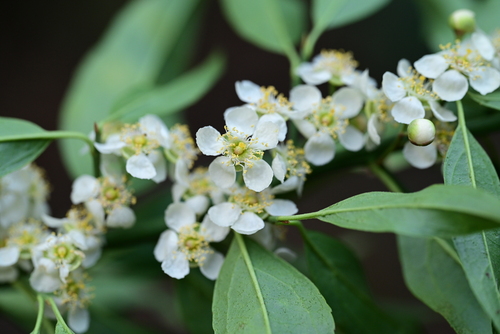
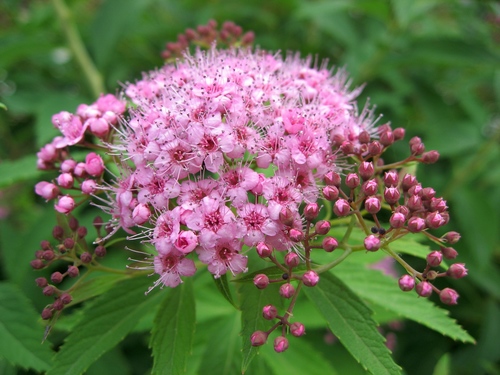
This entry covers Spiraea japonica, the parent species of the variety Spiraea japonica var. formosana (Hayata) Masam. Spiraea japonica is a deciduous perennial shrub that is one of several Spiraea species, with alternate, simple leaves growing on wiry, freely branching, erect stems. Its stems are brown to reddish-brown, round in cross-section, and sometimes covered in hairs. Mature shrubs reach 1.2 meters to nearly 2 meters in both height and width. Its deciduous leaves are generally ovate in shape, 2.5 cm to 7.5 cm long, have toothed margins, and grow alternately along the stem. Clusters of rosy-pink flowers form at the tips of the branches. Its seeds measure around 2.5 mm in length, and are held in small lustrous capsules. The species is naturally variable in form, and many varieties are available in the horticulture trade; to date, nine varieties have been described within the species. Spiraea japonica is native to Japan, China, and Korea, with Southwest China serving as the species' center of biodiversity. It has become naturalized across much of the Northeast, Southeast, and Midwest regions of the United States, as well as in parts of Canada. Common habitats for S. japonica include riparian areas, bogs, and other wetland habitats. It can also be found growing along streams, rivers, forest edges, roadsides, successional fields, and power line right-of-ways. It prefers full sun, but can tolerate partial shade. It prefers ample water during the growing season, but cannot tolerate extended periods of saturated soil. It grows best in rich, moist loam, but can adapt to a wide variety of soils, including alkaline soils. Spiraea japonica was introduced to North America as an ornamental landscape plant, and was first cultivated in the northeastern United States around 1870. Numerous cultivars have been selected for garden use. Tall forms of the shrub may be grown as hedges, low screens, or foundation shrubs, while low-growing forms can be used as groundcover or in garden borders. Some cultivars of S. japonica grown in the UK have earned the Royal Horticultural Society's Award of Garden Merit. S. japonica has been used as a traditional medicine by native peoples, and plant extracts from the species have been found to be bioactive.