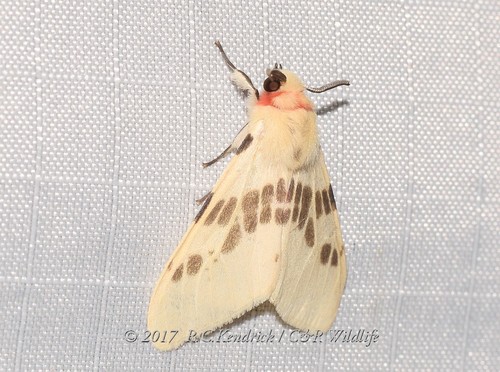
About Spilosoma virginica Fabricius, 1798
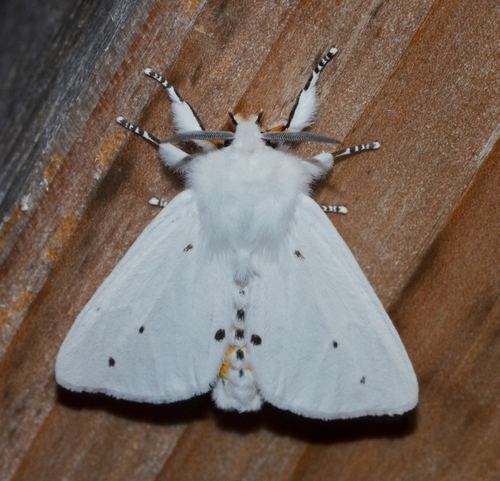
For identification: The caterpillar of Spilosoma virginica varies in color across different individuals, but a single specimen typically shows consistent overall coloration. It does not have unusual tufts of differently colored hair, nor does it have a distinctly colored head. For habitat and range: This species occurs throughout all of North America, but it is more common in the western half of the continent. Its caterpillar is counted among the most common caterpillars found on plants growing in yards and gardens. For reproduction: In the larval stage, female Spilosoma virginica are slightly larger than males. When they reach adulthood, females locate mates by extruding a specialized organ that releases a pheromone males can detect. Males, which unlike females have the large, feathered antennae that is characteristic of moths that use pheromones, fly in zigzag search patterns until they locate a female. After mating, males leave to search for other females, while females remain to lay between 20 and 100 eggs in a single layer on the underside of a leaf. Very young larvae stay grouped together, but become solitary as they grow larger.