About Spilogale putorius (Linnaeus, 1758)
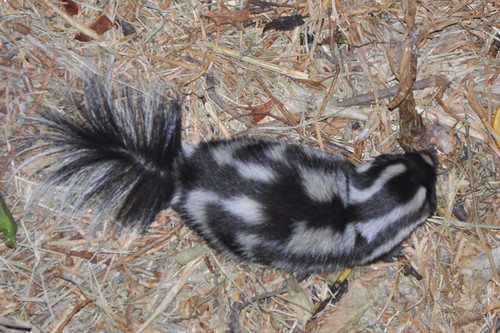
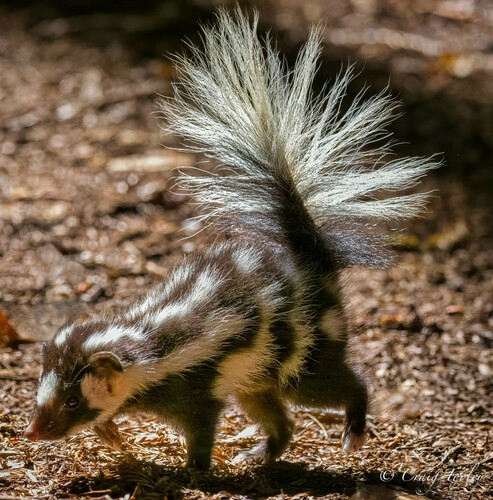
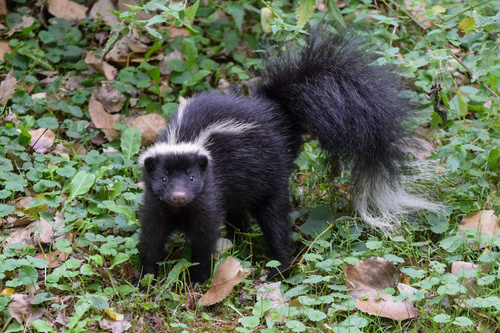
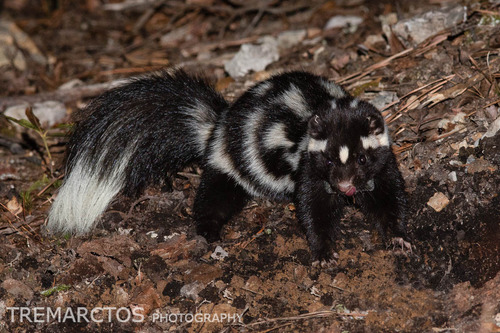
The eastern spotted skunk (Spilogale putorius) has a small, weasel-like body covered in fine, dense black fur marked with 4 to 6 broken white stripes. Two of these stripes run along the midline of the body, and four side stripes extend from the back of the head to the rear. The skunk also has white markings on both cheeks and on the tip of its tail. This fur pattern is classified as aposematic, and is thought to act as a warning to potential predators. Eastern spotted skunks typically have a body length of 24 to 26 centimetres (9.4 to 10.2 in) and a tail length of 11 to 19 centimetres (4.3 to 7.5 in), for a total body length of 35 to 45 centimetres (14 to 18 in). Their feet measure 40 to 53 millimetres (1.6 to 2.1 in) long; the forefeet have claws approximately 7 millimetres (0.28 in) long, while the hind feet have claws around 3.5 millimetres (0.14 in). The soles of the feet have pads that help with climbing, and the large forefoot claws assist the skunk with digging and grasping prey. Adult eastern spotted skunks have a total body weight ranging from 400 to 965 grams (14.1 to 34.0 oz).