About Sphinx sequoiae Boisduval, 1868
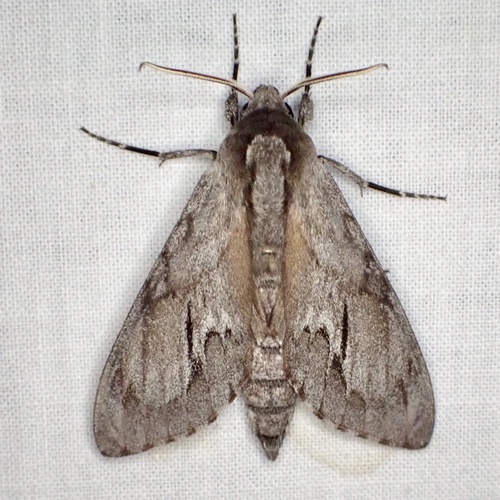
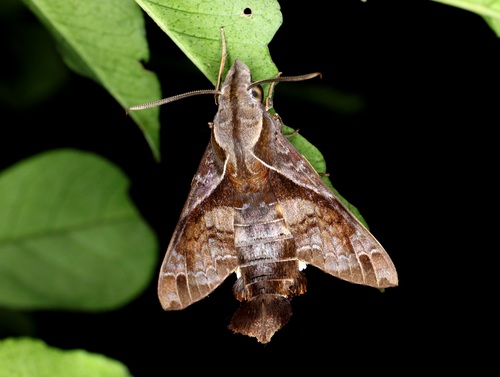
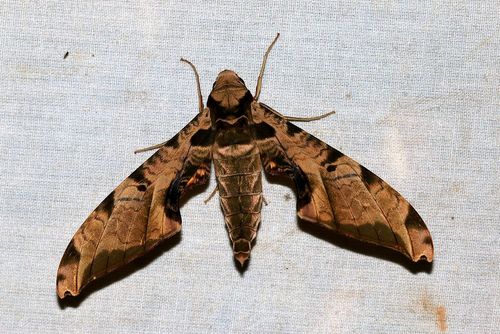
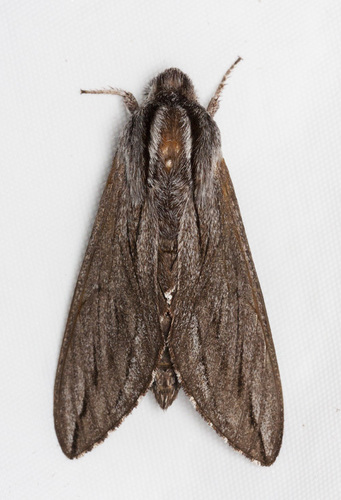
Sphinx sequoiae Boisduval, 1868, commonly called the sequoia sphinx, has a wingspan of 48–68 mm and a forewing length of 24–26 mm. It is the smallest species in its genus, with only Sphinx dollii being smaller, and it is sometimes confused with S. dollii despite the two species living in different regions. Its forewings are pointed and ash-gray, marked with several horizontal black dashes, while its hindwings are a solid uniform ash-gray. The thorax and abdomen are also gray, and the wing fringe is checkered with white and brown. Adult sequoia sphinx moths have one generation per year, and adults are active between May and August. Adults are active at night and are attracted to light. They feed on nectar from the flowers of western chokecherry (Prunus virginiana) and California buckeye (Aesculus californica). The larvae are green with white, red-brown, and yellow-brown spots. They have a short, blunt caudal horn with a yellow tip, and white spiracles rimmed with black. Larval host plants for this species are California juniper (Juniperus californica), Utah juniper (Juniperus osteosperma), and California incense cedar (Calocedrus decurrens). The eggs of Sphinx sequoiae are roughly 2 mm in both length and width, and are a pale bluish-green color.