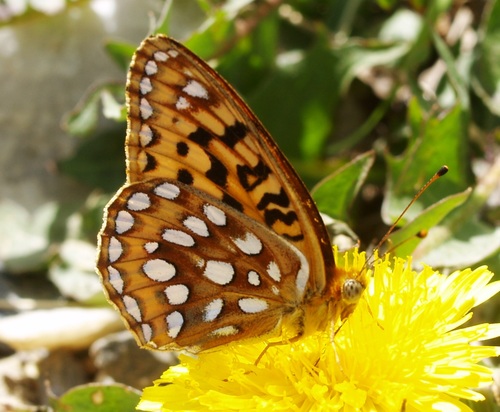
About Speyeria zerene (Boisduval, 1852)
Speyeria zerene is a medium-sized butterfly. Individual body length ranges from 25 to 28 mm, and the average wingspan is about 55 mm. The body is black, while the upperside of the wings is orange brown. The underside of the wings has black veins and black spots, plus silver metallic spots. Both the wings and body are covered in fine hairs. This species was originally native to an area extending from Washington state to California, and is currently found in Oregon and California. As of 2013, a sizable population was recorded at 9,000 feet (2,700 m) elevation in the Sierra Nevada range, in Alpine County, California. Its preferred habitats are coastal salt spray meadows, montane meadows, and stabilized dunes. The grasslands that form these habitats provide larval host plants, which are a very important component of the species' habitat. The life cycle of Speyeria zerene starts when pink-tan eggs hatch. Females lay these eggs on the dried stems and debris of the blue violet (Viola adunca). Dark-colored larvae with spikes on their backs emerge in the spring. The larvae grow through six developmental stages called instars, and feed on violet foliage until they are ready to pupate. They pupate on the violet, and the pupal stage lasts approximately two weeks before adult butterflies emerge. Adult butterflies have a life expectancy of about three weeks. During this adult stage, butterflies mate and feed exclusively on nectar. After mating, females lay eggs to begin the life cycle again.