About Speyeria mormonia (Boisduval, 1869)
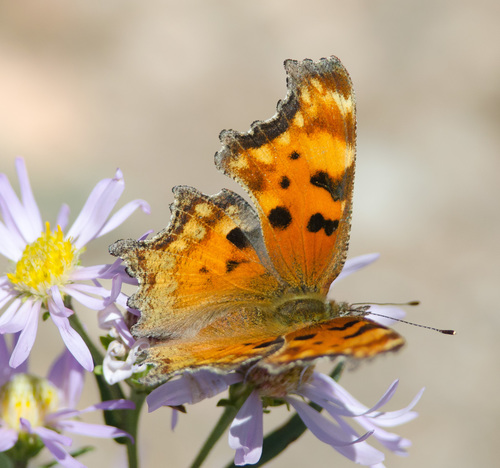
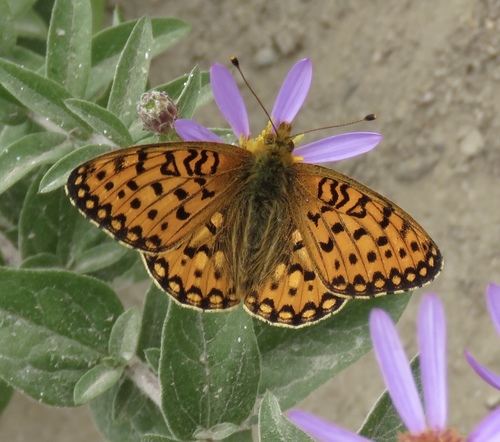
Speyeria mormonia, commonly known as the Mormon fritillary, is a North American butterfly in the family Nymphalidae. It is highly diverse, having split into several subspecies that cover a broad geographic range. This species shows extreme protandry, meaning adult males emerge before adult females, a trait that influences the behavior of both sexes. The habitat specificity of S. mormonia remains under active research, as few environmental predictors for the species are known, and it appears linked to a wide variety of habitats. This species is not threatened, so general conservation efforts are not required. S. mormonia occurs across western North America, with established populations in both the United States and Canada. Four subspecies are found in Canada, ranging from the Yukon region through British Columbia. More subspecies live in the United States: montane populations live in the Colorado Rocky Mountains, and mesic populations are found in California and Nevada. Compared to other Speyeria species, S. mormonia has a much wider range, which has resulted in its high genetic variability. S. mormonia occupies a wide array of habitats, including rocky mountainsides, saturated meadows, open grasslands, and clearings within pine forests. Its populations depend on climate conditions and the availability of Viola (violet) nectar; violet growth in turn relies on sufficient rainfall. S. mormonia is consistently recorded at higher elevations in both Canada and the United States. Populations typically occur in small, semi-isolated patches. The rate of dispersal between smaller sub-sites can differ depending on the subspecies or population in question. For example, the Canadian subspecies erinna lives only at isolated sites, while the Colorado population has been recorded to have high dispersal between sub-sites. Violet species are the host plant for larval S. mormonia. There is currently no evidence that any single violet species is preferred as a host, and S. mormonia larvae have been observed feeding on many different violet species, including Viola dunce, Viola canadensis, Viola glabella, Viola nephrophylla, Viola orbiculate, and Viola renifolia. Violets flower before the species' main adult flight season, so they serve as a limited nectar source for adult butterflies. Adult Mormon fritillary also feed at mud puddles—this behavior is most common in males and older females—and on nectar from Compositae plants. Female reproductive success is more dependent on adult feeding, while male adult survival is more closely tied to nectar availability.