About Spergula arvensis L.
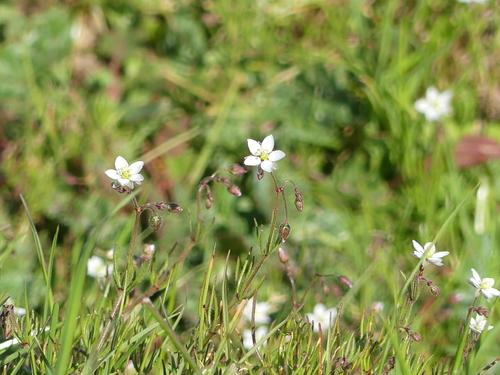
Corn spurry, scientifically named Spergula arvensis L., is a summer or winter annual broadleaf plant. Seeds of this plant that are buried in soil can survive for several years. Its leaves contain a compound called oxalate, which can be toxic if eaten in large quantities by livestock. Corn spurry reproduces via multiple methods. As a weed, it spreads freely thanks to its high seed production rate: each individual plant can produce 10 to 40 seed capsules, and each capsule produces around 20 seeds in summer and autumn. Corn spurry produces seeds even while it is flowering – the upper section of a single plant may still be blooming, while mature seeds on the lower section have already dropped. The plant's small, lightweight seeds can be carried by wind to cover adjacent land in the following year. It can also be spread by ruminants through the animals' excrement. Mature seeds cannot be digested in ruminants' stomachs, and they can still germinate and grow after being expelled in excrement. This allows the plant to be transmitted to and reproduce in suitable habitats that are far away, via the livestock trade.