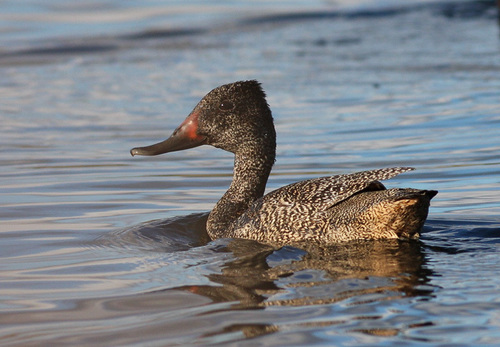
About Speculanas specularis (P.P.King, 1828)
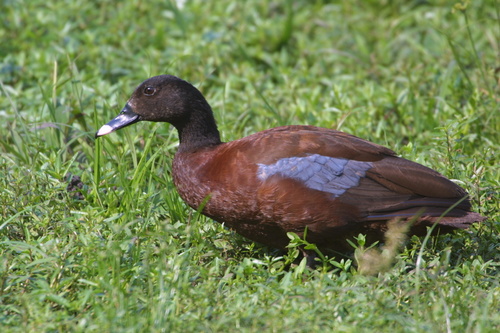
The bronze-winged duck, also called the spectacled duck, has the scientific name Speculanas specularis. It is a dabbling duck and the only species in the genus Speculanas. It is often grouped into the genus Anas alongside most other dabbling ducks, but its closest relatives are either the crested duck or the Brazilian duck, both of which also belong to their own separate monotypic genera. These three species together form an early-diverging South American lineage of dabbling ducks, which may also include steamer ducks. This species gets its common name from the bronze-colored speculum on its wings. It is also called pato perro, or dog-duck, referring to the harsh barking call produced by females. Bronze-winged ducks inhabit forested rivers and fast-flowing streams on the lower slopes of the South American Andes, found in central and southern Chile and adjacent areas of Argentina. The males and females of this species look identical. As documented by Johnsgard (2010), most observers agree that the species prefers relatively swift, heavily forested rivers, though it can also be found on slower rivers, and on pools or ponds in adjacent forested areas. The duck’s diet includes both plant and animal matter. Individuals have been observed eating small snails that are abundant on stony shingle beaches. Examination of stomach contents from two birds (published by Phillips, 1922–26) found seeds of water crowfoot (Batrachium), water milfoil (Myriophyllum), and a bulrush; leaves of water crowfoot; foliage and seeds of a pondweed; caddis fly larvae; and a small number of other aquatic insect remains. At least in captive settings, bronze-winged ducks spend a large amount of time on land, and have never been observed diving to feed.