About Spathodea campanulata Beauverd
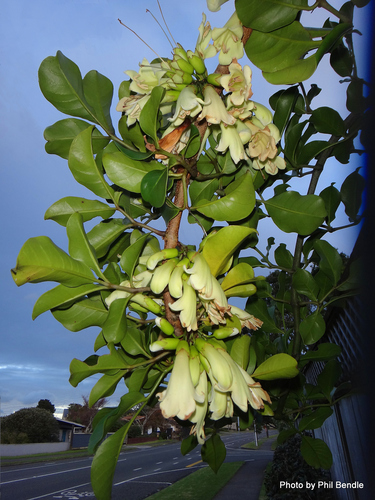
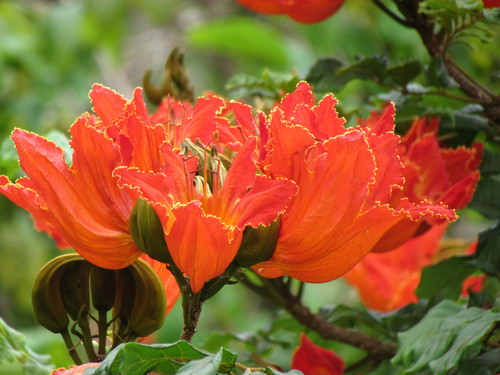
Spathodea campanulata Beauverd has ampule-shaped flower buds that hold water. Because these buds can squirt water, people sometimes play with them. The plant's sap can leave yellow stains on fingers and clothing. Open flowers of this species are cup-shaped, and hold rainwater and dew, which makes them attractive to many bird species. This plant is native to Angola, Cameroon, Ethiopia, Ghana, Kenya, Sudan, Tanzania, Uganda, and Zambia. It has been introduced as an exotic species to Australia, Bangladesh, Brazil, Colombia, Costa Rica, Cuba, Fiji, Hawaii, Honduras, India, Jamaica, Mauritius, Mexico, Papua New Guinea, Puerto Rico, Sri Lanka, Zanzibar, and the Philippines. It has become an invasive species in many tropical areas, including Hawaii, Queensland (Australia), Fiji, Papua New Guinea, South Africa, and the wet and intermediate zones of Sri Lanka. In Queensland, Australia, Spathodea campanulata is a declared class 3 pest species under the Land Protection (Pest and Stock Route Management) Act 2002. It is documented to be toxic to Australian native stingless bees, including Lipotriches (Austronomia) flavoviridis. For uses, the wood of this species is too weak for construction, but it works well for making boxes and toothpicks. Fijian children sometimes use the plant's flower buds as water pistols.