About Sorghum bicolor (L.) Moench
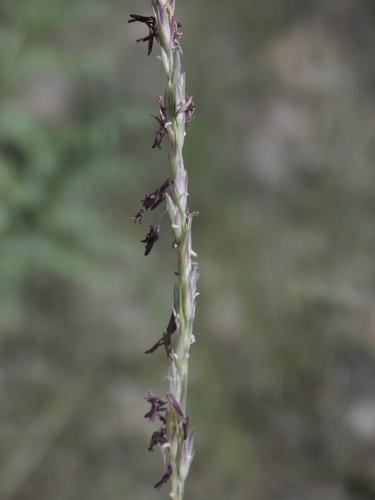
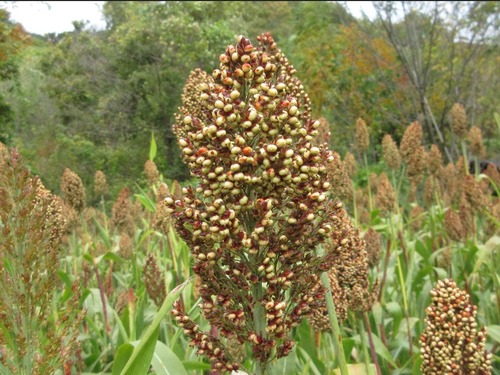
Sorghum bicolor, commonly called sorghum, is a large, stout grass that can grow up to 2.4 metres (8 ft) tall. It produces large, bushy flowerheads called panicles, which hold an edible starchy grain; each flowerhead can contain up to 3,000 seeds. Sorghum is grown in warm climates worldwide for use as food and forage. It is native to Africa and the Indian Subcontinent, and has many distinct cultivated forms. Most commercially produced sorghum comes from annual cultivars, though some wild Sorghum species are perennial; the Land Institute is working to develop a perennial sorghum cultivar that can produce repeated, sufficient grain harvests without needing to be resown each year. The name "sorghum" comes from the Italian word sorgo, which most likely derives from the 12th-century Medieval Latin terms surgum or suricum. These in turn may come from the Latin syricum, meaning "[grass] of Syria". Cultivated types of sorghum include milo, durra, imphee, hegari, kaffir, feterita, shallu, and kaoliang. Sorghum is widely used as food for people and as fodder for animals, and is also processed to make alcoholic beverages. It can be made into couscous, porridge, or flatbreads such as Indian jōḷada roṭṭi or tortillas. When burst in hot oil, it can be made into a popcorn that is smaller than popcorn made from maize. Since it does not contain gluten, it is suitable for use in gluten-free diets. In South Africa, the characteristically sour malwa beer is made from sorghum or millet; the process involves souring the mashed grain with lactic acid bacteria, followed by fermentation by wild yeasts that were already present on the grain. In China and Taiwan, sorghum is one of the main raw materials for Kaoliang liquor, a type of colourless distilled baijiu alcoholic drink. In countries including the United States, the stalks of sweet sorghum varieties are crushed in a cane juicer to extract a sweet, molasses-like juice. This juice is sold as syrup, and is also used as a feedstock to produce biofuel. In Nigeria, pulverized red sorghum leaf-sheaths have been used to dye leather, while in Algeria, sorghum has been used to dye wool. In India, sorghum panicle stalks are used to make bristles for brooms. Sorghum seeds and bagasse can potentially be fermented to produce lactic acid, which is used to make polylactic acid, a biodegradable thermoplastic resin.