About Sorbus sitchensis M.Roem.
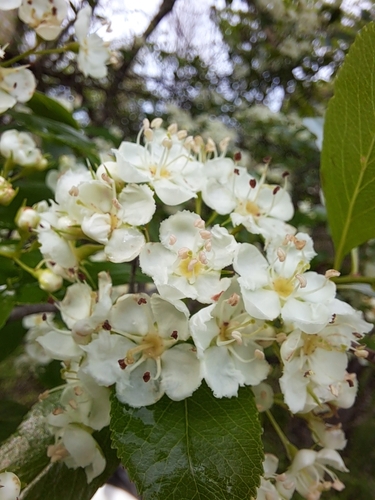
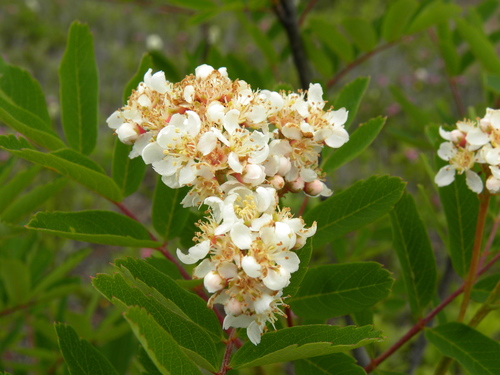
Sorbus sitchensis M.Roem. grows as a multi-stemmed shrub or small tree, reaching 1 to 4 metres (3 ½ to 13 feet) in height. Its winter buds are not sticky and covered in rusty hairs. The leaves are alternate and compound, measuring 6 to 10 inches long, and bear 7 to 11 blue-green leaflets. Leaflets are lanceolate or long oval with a rounded tip, and are usually toothed from their midpoint to their tip. In autumn, the leaves turn yellow, orange, and red. The leafy stipules of this species are caducous. After leaves are fully grown, between June and September, it produces flat, compound cymes that measure 3 to 4 inches across, each holding up to 80 white flowers. Each five-petaled flower is less than a centimeter across. The fruit is a berry-like pome that is globular, one-quarter of an inch across, bright pinkish red, and grows in cymous clusters. This species is endemic to northwestern North America. Its range extends from the Pacific coast of Alaska, through the mountains of Washington, Oregon, and northern California, eastward to parts of Idaho, western Alberta, and Montana. It is widespread across British Columbia. It grows best in moist, well-drained soils, and is most commonly found in mountainous regions, coastal forests, and along streambanks. In winter, the berries are eaten by Richardson's grouse and other bird species. The tart fruits of Sorbus sitchensis are edible.