About Sorbus alnifolia (Siebold & Zucc.) K.Koch
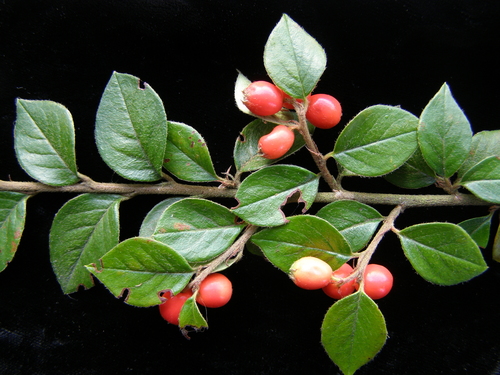
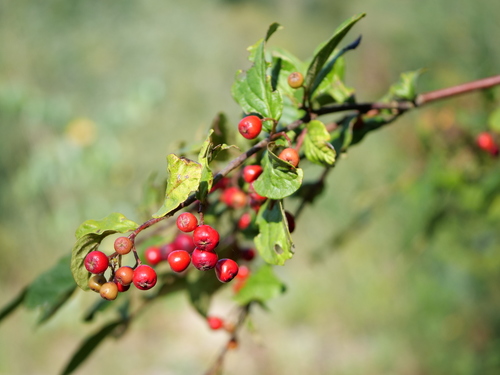
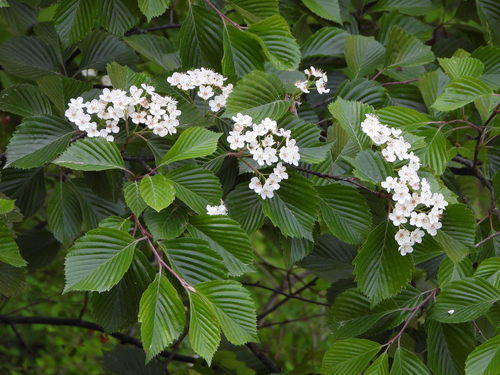
Alniaria alnifolia, also known by the scientific name Sorbus alnifolia (Siebold & Zucc.) K.Koch, is a medium-sized deciduous tree. It grows 10–20 m tall, with a trunk up to 30 cm in diameter and grey bark. Young trees have a columnar or conical crown that becomes rounded with age; branches angle upwards, and shoots are slender. The leaves are simple, 5–10 cm long and 3–6 cm broad. They are green on the upper surface, thinly covered with white hairs on the lower surface, and are usually unlobed, with variation noted in the varieties covered below. Leaves are broadest near the base, have serrated margins, and end in an acute apex. Autumn foliage turns from orange-pink to red. Flowers measure 10–18 mm in diameter, with five white petals and 20 yellowish-white stamens. Flowers are borne in corymbs 4–8 cm in diameter in late spring. The fruit is a globose pome 8–15 mm in diameter, bright red, with a dimple at the apex, and matures in mid autumn. This species has sometimes been classified in its own separate genus as Micromeles alnifolia, differing from other whitebeams due to its deciduous sepals on the fruit, sepals remain persistent on the fruit of other whitebeams. Genetic evidence places it close to Sorbus aria. It is occasionally grown as an ornamental tree in northern Europe, primarily valued for its autumn foliage colour. The cultivar 'Skyline' has been selected for its fastigiate growth habit.