About Sonchus maritimus L.
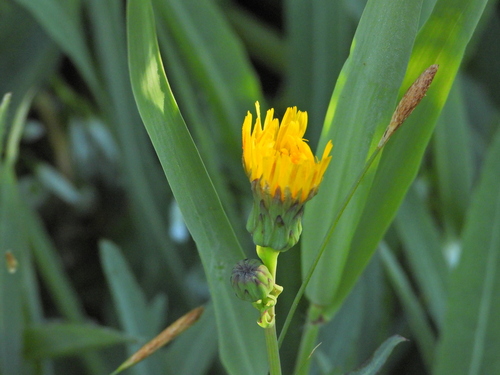
The genus Sonchus gets its name from the Ancient Greek word for these plants, σόγχος. All species in this genus share several key traits: they have soft, somewhat irregularly lobed leaves that clasp the stem, and at least when young, they form a basal rosette. The stem contains milky latex, and all flower heads are yellow, ranging from half an inch to one inch in diameter, with all florets being ray type. Sonchus fruits are single-seeded, dry, and indehiscent.
Sow thistles (the common name for Sonchus species) are common roadside plants. They are native to Eurasia and tropical Africa, but can now be found almost worldwide in temperate regions. Mature sow thistle stems grow between 30 cm and 2 m (1 to 6 ft) tall, with height varying by species and growing conditions. Older plants show coloration ranging from green to purple. When any part of the plant is cut or damaged, it exudes milky latex. This trait gave the plant its common name 'sow thistle', as it was historically fed to lactating sows in the belief that it would boost milk production. In some regions, these plants are also called 'milk thistles', though the name 'milk thistle' most commonly refers to the genus Silybum instead.
Sow thistles are common host plants for aphids. Gardeners may view this as either a benefit or a problem: aphids can spread from sow thistle to other garden plants, but sow thistle can also support the growth of beneficial predators such as hoverflies, making it an excellent sacrificial plant. Sonchus species are also used as food by the larvae of several Lepidoptera species, including Celypha rufana, the broad-barred white, grey chi, nutmeg, and shark moths. The fly Tephritis formosa is known to attack the capitula of these plants.
Sow thistles have long been used as fodder, especially for rabbits, giving them the additional common names 'hare thistle' or 'hare lettuce'. They are also edible for humans as a leaf vegetable. Older leaves and stalks can be bitter, but young leaves have a flavor similar to lettuce. In New Zealand, this plant is called pūhā or rareke (raraki), and it is a traditional food eaten by Māori people. When cooked, its flavor resembles chard. Indigenous peoples of North America also ate the plant's greens. Young leaves are edible raw, while older greens can be eaten after a short period of cooking.