About Soliva sessilis Ruiz & Pav.
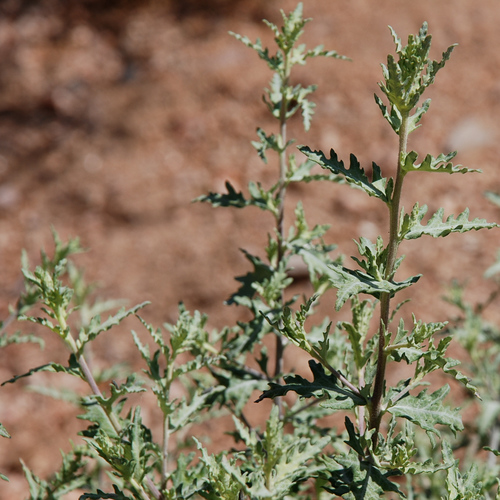
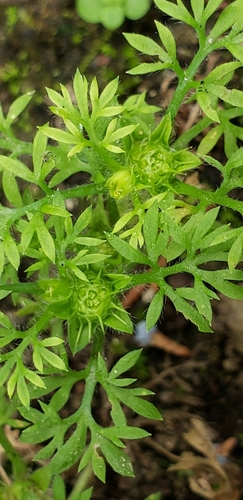
Soliva sessilis is a flowering plant species belonging to the Asteraceae family. It is one of up to nine recognized species in the genus Soliva, and it grows as a low-growing herbaceous annual. It has a wide range of common names, including field burrweed, Onehunga-weed, lawn burrweed, lawnweed, jo-jo weed, and common soliva. It is also among several plants referred to as bindi weed, bindii (alternatively spelt bindi; pronounced /bɪn.di/), or bindi-eye. This weedy species is best known for producing tiny seeds with sharp needles. It has small feathery leaves that look similar to parsley, and bears exposed upward-pointing rosettes of seeds contained in pods that sit nestled at branch junctions. Areas infested with this plant are often called "bindi patches" by people familiar with the species, and these areas cannot be comfortably walked on barefoot. Dogs and cats experience similar discomfort and tend to avoid areas where they have previously encountered the plant. Though originally native to South America, the plant is now widely established across many regions of the world, including Australia, New Zealand, southwest France, Hawaii, California, and several other U.S. states. It occurs mainly in parks and sports ovals, and has also become an invasive species in lawns in the southeastern United States, Australia, and New Zealand. Bindi weed can be removed manually by pulling it out by the root. This removal is most effective when the plant has grown large, started flowering, and not yet produced seeds — it is especially easy after rain when the ground is softer. The most effective manual removal method uses a hand tool that pinches the plant's taproot and provides leverage to reach under the plant's central core. Bindi weed can also be controlled with herbicide treatment. The best time to eliminate the weed before its seeds germinate is late winter and early spring. Effective herbicides for this purpose are typically combinations of MCPA and dicamba, which target broad-leaved plants without harming grasses. These chemicals work similarly to natural plant auxins; their increased concentrations cause unnatural plant growth that ultimately kills the plant. Mowing existing grass to a higher height allows more competitive plant species to thrive in the area, which helps control bindi weed. Bindi weed favors compacted soil, so aerating the soil can also help reduce its presence.