About Solidago spithamaea M.A.Curtis ex A.Gray
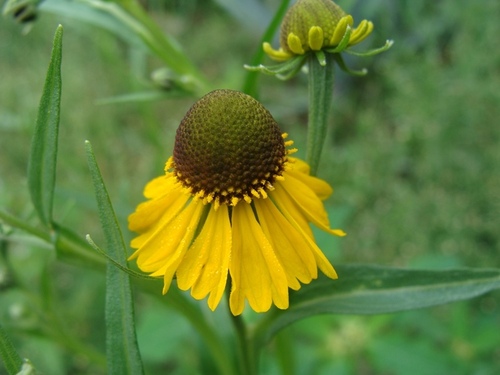
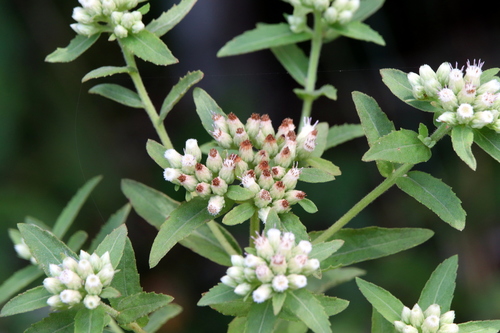
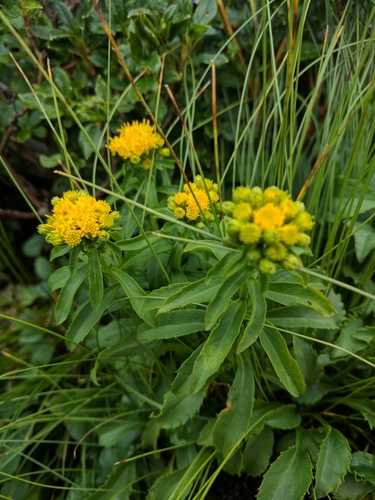
Solidago spithamaea grows one or more stems from an underground rhizome and caudex, reaching heights of 10 to 40 centimeters (4 to 14 inches) tall. It produces an unpleasant scent. The leaves vary in shape and size, with leaves higher on the stem growing smaller. Its inflorescence is a compact or spreading cluster holding 15 to 50 or more flower heads. Each flower head has a bell-shaped base around half a centimeter (0.2 inches) long, lined with phyllaries that have pointed, darkened tips. Each head holds 8 to 15 yellow ray florets, just a few millimeters long, that surround 20 to 60 disc florets. It produces fruit as an achene topped with a bristly pappus. This species grows on the high summits of the Blue Ridge Mountains in western North Carolina and eastern Tennessee. There is one population in each of Avery County and Mitchell County, North Carolina, and Carter County, Tennessee, and the entire occupied region spans around 15 square miles (38 km²). It can be found on Grandfather Mountain, Hanging Rock, and Roan Mountain, growing on rocky peaks, cliffs, and talus-covered slopes. Its habitat is mostly barren, fully exposed to sun, and subject to harsh winter weather. This is one of several relict goldenrod species, meaning it was more widespread when regional conditions were colder and wetter. As glaciers retreated, the area became warmer and drier, leaving this goldenrod only in areas that most closely match the alpine climate it is adapted to. It now persists only on high mountain peaks with harsh winter conditions, and few relict goldenrods remain this far south. Other plants that grow in this barren habitat are mainly grasses and sedges, along with other rare mountain herbs and trees including Heller's blazingstar (Liatris helleri), red spruce (Picea rubens), cliff avens (Geum radiatum), and sandmyrtle (Kalmia buxifolia). The habitat where this plant persists is a popular area for hiking and sightseeing, and much of it has been developed into roads, trails, parking lots, and other recreational infrastructure. Remaining intact habitat is vulnerable to damage from foot trampling. Additional threats to the species include acid precipitation and climate change.