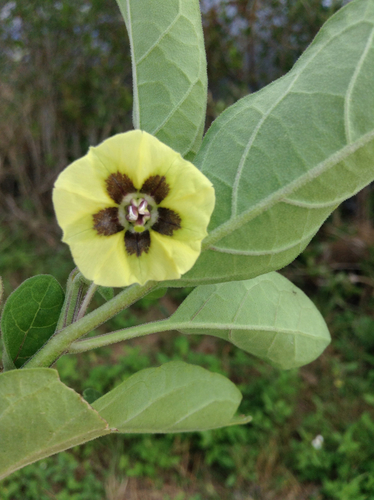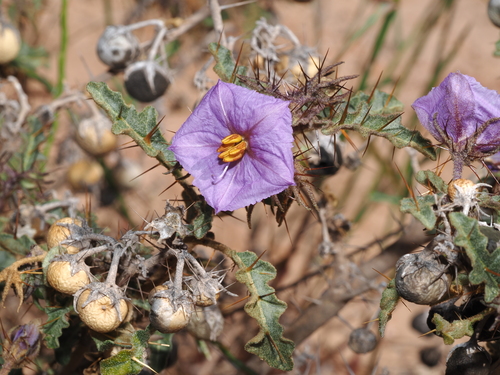
About Solanum muricatum Aiton
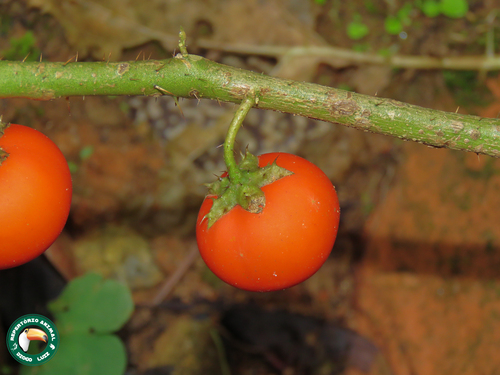
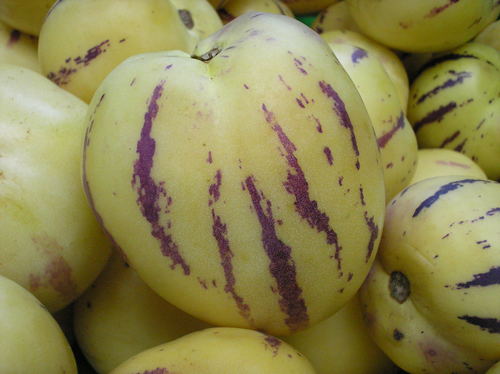
Solanum muricatum Aiton is an evergreen shrub species native to South America, grown for its sweet edible fruit. It is commonly called pepino dulce (meaning "sweet cucumber" in English, used to distinguish it from the cucumber that is also called pepino in Spanish) or simply pepino. The fruit of pepino dulce resembles the melon Cucumis melo in color, and its flavor is a succulent mix of honeydew and cucumber. For this reason, it is sometimes also called pepino melon or melon pear. Another common name, tree melon, is more often used for papaya Carica papaya. The pepino dulce plant generally does not look like a tree; it grows more like a trailing ground cover plant. This species is a close relative of other nightshades cultivated for their fruit, including tomato S. lycopersicum and eggplant/aubergine S. melongena, and its fruit closely resembles the fruit of these relatives. The fruit is commonly sold in markets in Colombia, Chile, Bolivia, Peru and Kenya, but is less commonly found overseas because it is very sensitive to handling and does not transport well. Commercial cultivar development and fruit export efforts have been carried out in New Zealand, Turkey, Mauritius and Chile. Pepino dulce is presumed to be native to the temperate Andean regions of Colombia, Peru and Chile, though it is not found growing in the wild, and full details of its domestication remain unknown. Pepinos are rarely found in archaeological contexts because they are soft and pulpy, and do not preserve easily, while their tough small seeds are easily lost among debris. Early Spanish chroniclers already recorded pepinos being cultivated on the coast, with the Moche Valley in Peru being particularly well known for the crop. Pepinos were also a popular decorative motif in Moche art. In the United States, the fruit was recorded grown in San Diego before 1889, and in Santa Barbara by 1897. More commercially viable cultivars were introduced from New Zealand and other locations toward the end of the 20th century, which led to the fruit becoming available in up-scale markets in Japan, Europe and North America. Pepino dulce is relatively hardy. In its native range, it grows at altitudes from near sea level up to 3,000 m (10,000 ft.). It performs best in a warm, mostly frost-free climate. The plant can survive temperatures as low as -2.5 °C (27 to 28 °F) if the freeze is not prolonged, though it may drop many of its leaves. While the species is perennial, its sensitivity to chilling, pests, and diseases means growers usually replant the crop every year. The crop adapts well to greenhouse cultivation: when trained to grow up to 2 m tall, yields are 2-3 times larger than those achieved outdoors. Pepinos are propagated by cuttings, since they establish easily without rooting hormones. They are grown in a similar way to their relative the tomato, though they naturally grow upright and can be cultivated as a free-standing bush. They are sometimes pruned, and supports are occasionally used to prevent the weight of fruit from pulling the plant down. It has a fast growth rate and produces fruit within 4 to 6 months after planting. Though it is a perennial species, it is usually cultivated as an annual. Seedlings cannot tolerate weeds, but mature plants can easily compete with low-growing weeds. Just like their relatives tomatoes, eggplants, tomatillos and tamarillos, pepinos are extremely attractive to beetles, aphids, white flies and spider mites. Pepinos tolerate most soil types, but require consistent moisture to produce good fruit. Established bushes have some tolerance to drought stress, but this typically reduces yield. The plants are parthenocarpic, meaning they do not need pollination to set fruit, though pollination encourages greater fruiting. Pepino dulce is primarily grown commercially in Chile, New Zealand and Western Australia. In Chile, more than 400 hectares are planted in the Longotoma Valley, and an increasing share of the harvest is exported. Colombia, Peru, and Ecuador also grow the plant, but on a smaller local scale. Outside the Andean region, it is grown in multiple Central American countries, Morocco, Spain, Israel, and the highlands of Kenya. In the United States, several hundred hectares of the fruit are grown on a small scale in Hawaii and California. More recently, more commercially viable cultivars have been introduced from New Zealand and other areas. As a result, the fruit has entered up-scale markets in Japan, Europe and North America, and is slowly becoming less obscure outside South America. Study of the molecular variation of pepino is of interest for multiple reasons. Although pepino seeds are fertile and produce vigorous offspring, the crop is primarily propagated by cuttings, and as a result, its genetic structure may differ from that of seed-propagated crops. Delicate with a mild flavor, pepinos are most often eaten as a fresh snack fruit. They also pair very well with many other fruits.