About Solanum carolinense L.
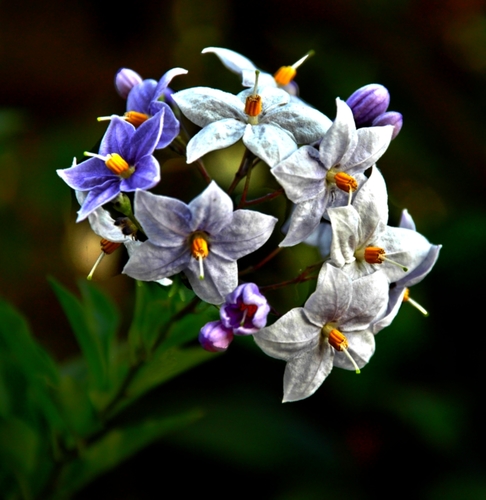
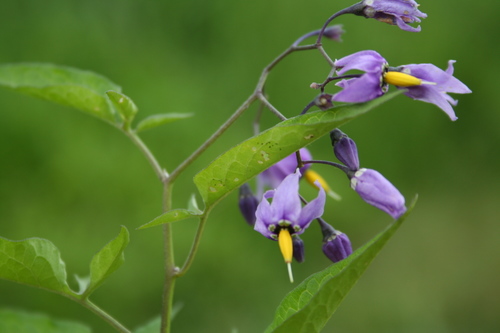
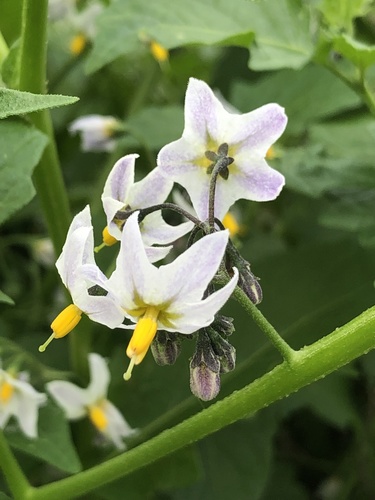
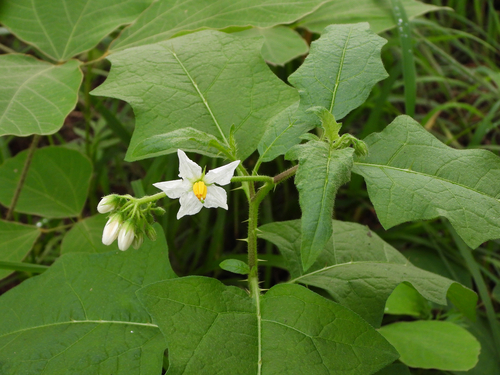
Solanum carolinense L. is a perennial subshrub. Its leaves are alternately arranged, shaped from elliptic-oblong to oval, and measure 6 to 11 centimetres (2+1⁄2 to 4+1⁄2 inches) long. Each leaf has irregular lobes or coarse teeth, both leaf surfaces are covered in fine hairs, and crushed leaves give off a potato-like scent. Its flowers have five petals, and are most often white or purple with yellow centers; a blue variant also exists that looks similar to a tomato flower. The plant produces berry fruits that resemble tomatoes. Immature fruits are dark green with light green stripes, and turn yellow and wrinkled as they mature. Each fruit holds around 60 seeds. Flowering occurs through the summer in the Northern Hemisphere, from April to October. Mature plants reach up to 90 cm (3 ft) in height, with woody stems on older individuals. This species spreads via both seeds and underground rhizomes. In the wild, it grows in pastures, roadsides, railroad margins, disturbed areas, and waste ground. It can also occur in less disturbed habitats. It typically grows to around 1 m (40 in) tall, though it is usually shorter. It prefers full sun, tolerates both wet and dry conditions, grows well in sandy or loamy soils, and can adapt to a wide range of other soil types. It grows most vigorously and is most likely to become weedy or aggressive on disturbed sites. Historically, many parts of this plant have been used to make medicines for various conditions, and it was included in the United States National Formulary for pharmacist use from 1916 to 1936. All parts of the plant, including its tomato-like fruit, contain varying levels of toxins, in the form of the toxic alkaloid solanine glycoalkaloid, which acts as one of the plant’s natural defenses. Ingesting any part of the plant can cause fever, headache, scratchy throat, nausea, vomiting, and diarrhea. Ingesting the fruit can lead to abdominal pain, circulatory and respiratory depression, or even death.